A proposal to grant legal status to approximately 500,000 undocumented migrants in Spain has been submitted to the European Parliament for debate, causing widespread controversy within Spain and across the European Union.
Plan Details and Historical Context
Under the plan, migrants who have resided in Spain for at least five months by December 31, 2025, will be eligible to apply. To expedite the process, the government plans to open a simplified application window from April to June 2026, promising a decision within 15 days. Crucially, once an application is submitted, any deportation proceedings against the individual will be automatically suspended. This marks Spain’s largest regularization effort in nearly two decades, with the last similar measure implemented in 2005 by the Zapatero government, which granted residency to over 570,000 migrants.
The EU’s Cautious Stance
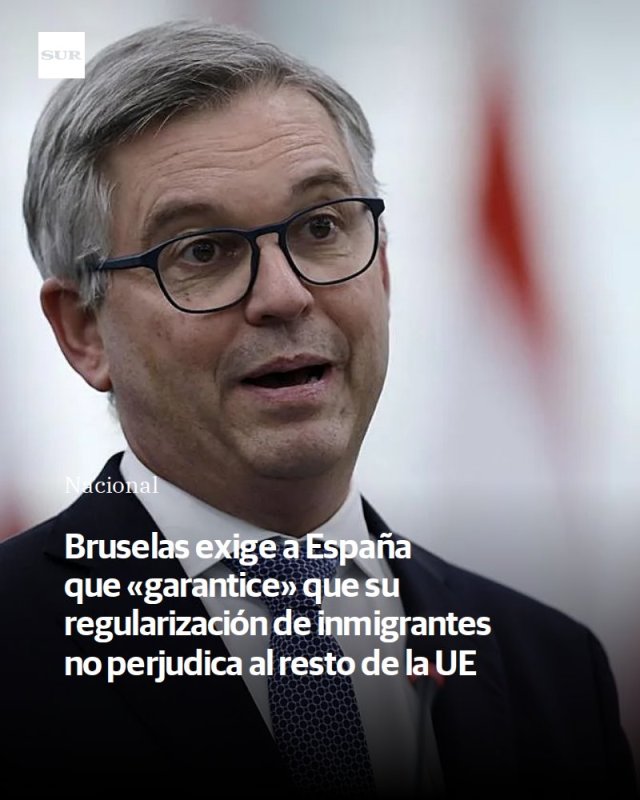
The European Commission has expressed significant concern. At a meeting in Strasbourg, EU Commissioner for Migration Magnus Brunner explicitly warned that unilateral regularization actions by member states should not become a ‘blank check’ and must not create negative ripple effects for other EU countries. He reiterated that under EU law, if individuals granted residency in Spain through this plan are found illegally staying in another member state, Spain is obligated to take them back. Brunner urged all parties to adhere to the common framework of the Pact on Migration and Asylum to establish a safe, legal, and centrally controlled EU migration system.
Political Storm within Spain
The plan has faced fierce opposition from right-wing parties within Spain. People’s Party (PP) leader Dolors Montserrat accused Prime Minister Pedro Sánchez of attacking Europe’s unified immigration policy, potentially creating a ‘pull effect’ for more undocumented migrants, and questioned his motives as an attempt to ‘manipulate the census’ for electoral gain. The rhetoric from Jorge Buxadé, leader of the far-right Vox party, was even stronger, calling Sánchez ‘a threat to all of Europe’ and predicting the move would lead to the ‘collapse’ of public services and a rise in crime, purely to ‘win votes’ in municipal elections.
Criticism from the European Parliament
The controversy has also extended to the European Parliament. Swedish MEP Tomas Tobé, a member of the European People’s Party (EPP), criticized Sánchez for living in ‘an alternate reality,’ suggesting the decision was made to ‘appease his far-left allies’ and would have consequences for the entire EU.
