A Stark Divide Between Official Forecasts and Police Warnings
The Spanish government, in collaboration with the Podemos party, is promoting a ‘special regularization’ plan for foreigners already living and working in the country. Official initial forecasts suggest the measure will benefit about 500,000 foreigners, with some agencies estimating closer to 840,000. However, according to anonymous sources from several veteran immigration police officers cited by LA RAZÓN, this figure is a gross underestimate. They believe the actual number of applicants could be as high as ‘2 to 3 million,’ a massive discrepancy with official data. Although the regularization measure only applies to residents in Spain before December 31, 2025, in an attempt to quell criticism about a ‘pull effect,’ police believe it could still send the wrong signal to human trafficking networks.
Family Reunification: The Key Variable for Population Surge
Law enforcement’s biggest concern is not the initial number of applicants, but the subsequent chain reaction. ’What’s truly difficult to control is the number of family members who will later apply for reunification,' one officer pointed out. Under current regulations, individuals with regularized status are entitled to apply for family reunification for their relatives. Internal police estimates suggest this is the key factor that could ultimately swell the total number of beneficiaries to several million, placing immense, unsustainable short-term pressure on Spain’s public service systems, such as healthcare, education, and housing.
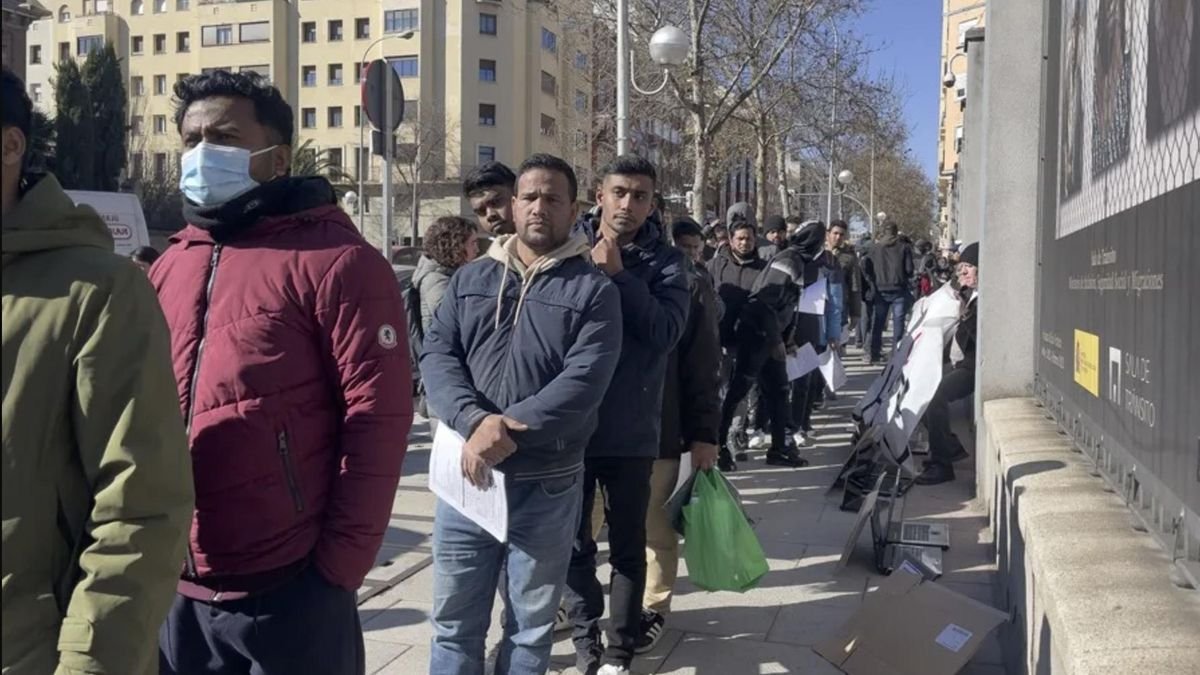
Security Loopholes: The Risk of a ‘Clean Slate’ Channel
Even more alarming for the police is that the amnesty plan could become a ‘clean slate’ channel for criminals. According to supplementary materials, between January 15 and February 6, 2026, alone, the number of ‘lost passport’ cases among Pakistani citizens increased by 866.67% year-on-year. Police found that many of these reporters have criminal records and suspect they are using this tactic to forge proof of residency in Spain. Furthermore, the draft law has significant loopholes in its review of criminal records. Although the bill stipulates that individuals with a criminal record cannot apply, the lengthy judicial process means many with records for theft or drug trafficking may not yet have been formally convicted. More seriously, if an applicant cannot obtain a certificate of no criminal record from their country of origin, they only need to submit a ‘sworn declaration’ as a substitute. Police view this as a systemic security flaw that opens the legal door for individuals with serious criminal backgrounds.
Public Order Pressure and Legal Challenges
The sharp increase in population and the lax background checks on applicants inevitably raise concerns about future public order. Police worry this will directly lead to increased pressure on law enforcement. At the same time, the measure itself faces legal challenges. Some legal professionals warn that if the government does not first amend the current ‘Immigration Law,’ this special regularization decree is likely to be appealed to the Supreme Court and could be suspended, filling its future with uncertainty.
