Sharp Rise in Reports, Astonishing Increases for Some Nationalities
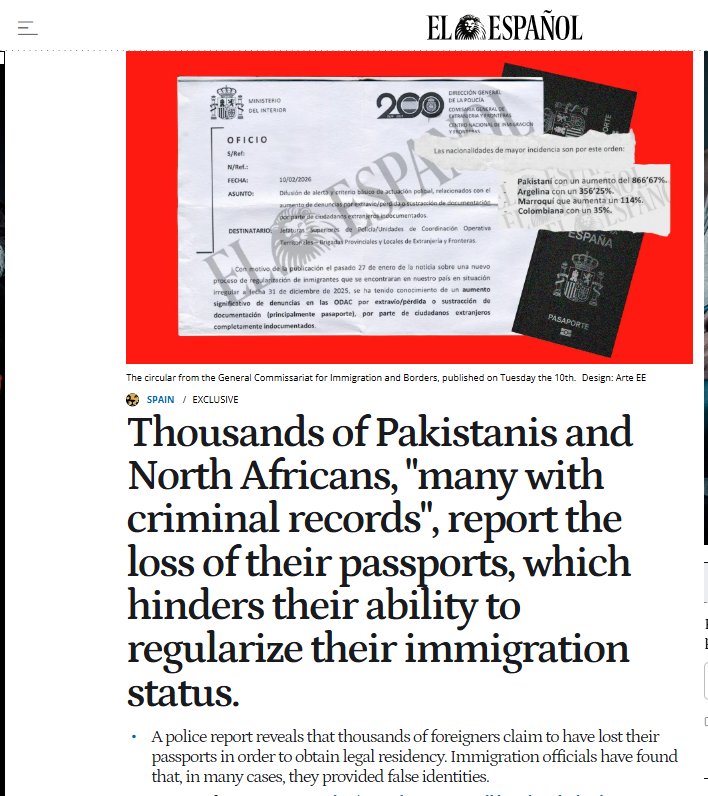
In an internal circular issued on February 10, 2026, Spain’s General Commissariat for Immigration and Borders (Comisaría General de Extranjería y Fronteras) noted a “significant increase” in the number of cases where foreign nationals without legal identification reported their passports or other documents as lost or stolen.
By comparing data from January 15 to February 6, 2026, with the same period last year, the police found that the overall number of these reports increased by about 60%. The surge was particularly striking for certain nationalities: reports from Pakistani citizens skyrocketed by 866%, Algerian nationals saw a 356% increase, Moroccan nationals a 114% rise, and Colombian nationals a 35% increase.
The Motive: Paving the Way for Immigrant Regularization
Police analysis suggests that the surge in reports is closely linked to a special regularization measure approved by the Spanish government. This measure aims to grant legal status to foreign nationals who were already in Spain before December 31, 2025. One of the application requirements is that the applicant must be able to prove they have been in Spain continuously for at least five months at the time of application.
According to the regulations, documents such as city hall registration (empadronamiento), medical records, rental contracts, or transportation tickets can serve as proof of residence. Information obtained by the police indicates that some undocumented immigrants may be attempting to obtain an official document (a copy of the police report) by filing a report, using it as supporting evidence of their presence in Spain before the cut-off date.
Police Step Up Scrutiny and Response
In response to this trend, the General Commissariat for Immigration and Borders has issued directives to all police units, instructing them to conduct comprehensive identity checks on foreign nationals who report lost documents and lack any form of identification, and to meticulously verify their administrative status in Spain.
The circular mentions that after preliminary checks on some of the individuals filing reports, police found that “in many cases,” these individuals not only have criminal or police records in Spain or other countries but are also using false identities or are subject to active administrative sanctions, such as deportation orders. Under the new regulation, once a regularization application is submitted, any related deportation proceedings are suspended, which could also be a motive for some to file a report.
