Core of the Reform: The “Single Agenda Model” Pilot
The Valencian Community’s Department of Health (Conselleria de Sanidad) has initiated a major reform called the “Single Agenda Model,” aiming to standardize the daily schedules of primary care physicians across all public health centers in the region. The program was first implemented as a pilot in the Orihuela health department, with its core principle being the standardization of regular in-person appointments to a fixed duration of 10 minutes.
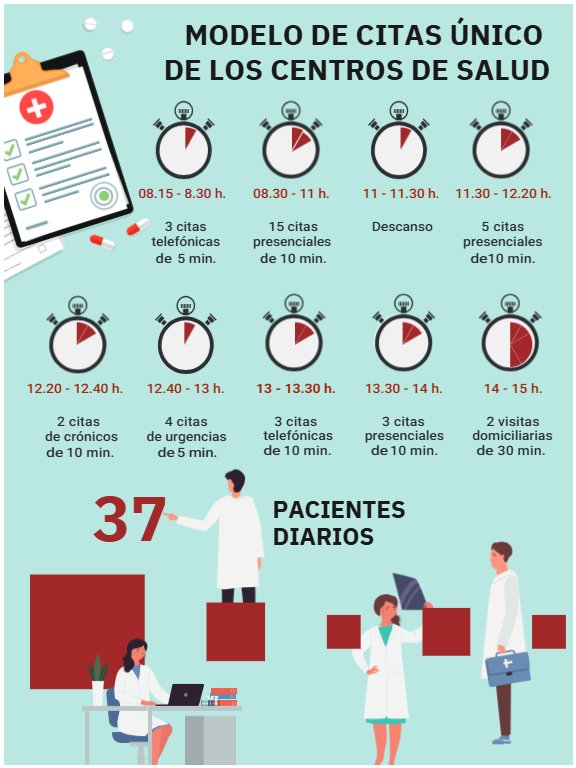
Details of the Standardized Schedule
Under the new regulations, a doctor’s working hours are from 8:15 AM to 3:00 PM. Each doctor is required to handle 37 appointment slots per day, allocated as follows:
- In-person consultations: 23 slots, 10 minutes each.
- Telephone consultations: 6 slots.
- Chronic disease follow-ups: 2 slots.
- Home visits: 2 slots, 30 minutes each (including travel time).
- “Fast-track” appointments: 4 slots, for urgent issues or prescription renewals, 5 minutes each.
Motivation for the Reform: Paving the Way for an AI Appointment System
Officials explain that the primary goal of standardization is to introduce an AI virtual voice assistant by the summer of 2026 to automatically manage citizens’ medical appointments. Currently, the chaotic scheduling rules across different medical centers prevent the AI system from operating with uniform parameters. Implementing a unified appointment process throughout the region is a prerequisite for deploying this technology. Feedback from the pilot shows that the new model has effectively shortened patient waiting times, with significant improvements in queuing situations in communities where appointment waits exceeded 15 days during flu season.
Controversy Over Efficiency vs. Quality
Although the new regulation has shown initial success in improving efficiency, its standardized model has drawn criticism from multiple quarters. Medical experts argue that a rigid, one-size-fits-all schedule cannot adapt to the differences between various areas, such as the vastly different patient needs in Valencia’s city center compared to the remote small town of Jalance. Meanwhile, union organizations sharply point out that this “industrialized” scheduling squeezes the time doctors can dedicate to chronic disease management and preventive care, potentially leading to a decline in the quality of medical services, merely solving the queuing problem on paper. The Department of Health has stated that it will continue to evaluate and make adjustments based on the pilot’s results, and it is expected that the system will be extended to all public medical institutions in the provinces of Valencia, Alicante, and Castellón in the coming months.
