Total Population and Quarterly Growth
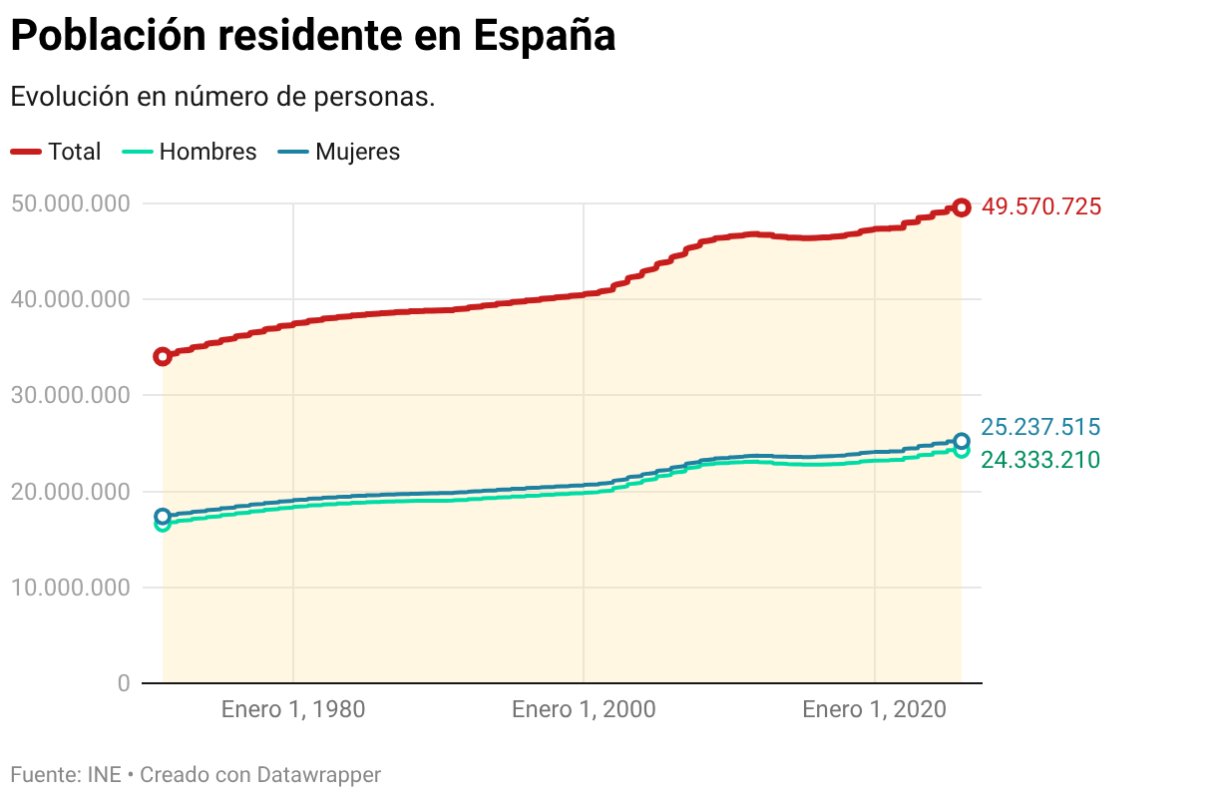
According to data released by Spain’s National Statistics Institute (INE) on February 12, 2026, the total population of Spain rose to 49,570,725 as of January 1, 2026, setting a new historical record. The data shows that in the fourth quarter of 2025, the resident population increased by a net of 81,520 people, a slower pace compared to the third quarter. Simultaneously, the number of households nationwide grew to 19,746,638, an increase of 46,332 from the previous quarter.
Immigration as the Core Driver of Population Growth
The core driver of this population increase is international migration. Data indicates that Spain’s foreign resident population increased by 56,431 in the fourth quarter of 2025, bringing the total to 7,243,561. As of January 1, 2026, foreign nationals accounted for 14.6% of Spain’s total population.
Notably, the number of Spanish citizens living abroad also surpassed the 10 million mark for the first time, reaching 10,004,581. This figure even exceeds the total number of foreign residents within Spain, reflecting the complex dynamics of Spain’s population composition.
Main Countries of Origin and Emigration Trends
Looking at the origins of immigrants, the largest groups of foreigners who moved to Spain in the fourth quarter of 2025 primarily came from Latin America and North Africa. The top three were: Colombians (36,600 new arrivals), Venezuelans (27,000 new arrivals), and Moroccans (22,000 new arrivals). Additionally, 18,500 Spaniards chose to return to live in the country.
During the same period, among those leaving Spain, Moroccans (13,000), Colombians (12,500), and native Spaniards (7,900) were the largest groups, creating a two-way demographic flow.
Significant Regional Differences in Population Change
Among Spain’s 17 autonomous communities and 2 autonomous cities, population changes show clear regional differences. In the fourth quarter of 2025, the vast majority of regions experienced population growth. Among them, five regions exceeded the national average growth rate (0.16%). The Valencian Community led the list with a 0.34% increase, followed by Castilla-La Mancha (0.27%) and the Community of Madrid (0.24%).
However, not all regions are growing. The Balearic Islands and the autonomous city of Melilla experienced negative population growth, with decreases of -0.07% and -0.26%, respectively.
