Spanish Prime Minister Pedro Sánchez recently announced a plan to invest in the construction of 15,000 public housing units through the newly established ‘Spain Growth Fund’ to address the public’s most pressing housing issues. However, this ambitious plan may be thwarted by a fundamental yet critical obstacle: Spain’s power grid is overloaded, and new residences may be unable to connect to the power system.
Grid Capacity at Critical Levels, New Construction Faces Blackout Risk
According to electricity industry sources, Spain’s grid capacity usage has reached a critical level of 88%. This means that in many areas, the grid lacks sufficient surplus to accommodate new high-consumption users, including new residential areas and businesses. A power company representative stated clearly that whether new homes can get electricity depends on the construction location, but the grid in most regions is already saturated. In the city of León, for instance, two apartment development projects have been forced to halt because they could not obtain grid connection permits. For Sánchez’s promise of 15,000 homes to be realized, the ‘power supply’ hurdle must first be overcome.
350,000 Housing Applications Rejected, Developers in a Tough Spot
According to data from the Spanish Association of Real Estate Developers (Asprima), in 2024 alone, as many as 350,000 grid connection applications for new homes were rejected nationwide. Unlike in the past when the application process only caused project delays, today’s outright rejections mean projects may not even be able to start. The real estate industry is already under multiple pressures, including legal uncertainty, rising material costs, cumbersome bureaucratic procedures, and labor shortages. This structural problem of grid saturation is undoubtedly making a bad situation worse, severely hitting market confidence and supply capacity.
Regulatory and Expansion Deadlock: A Grid Dilemma Amidst Multiparty Conflicts
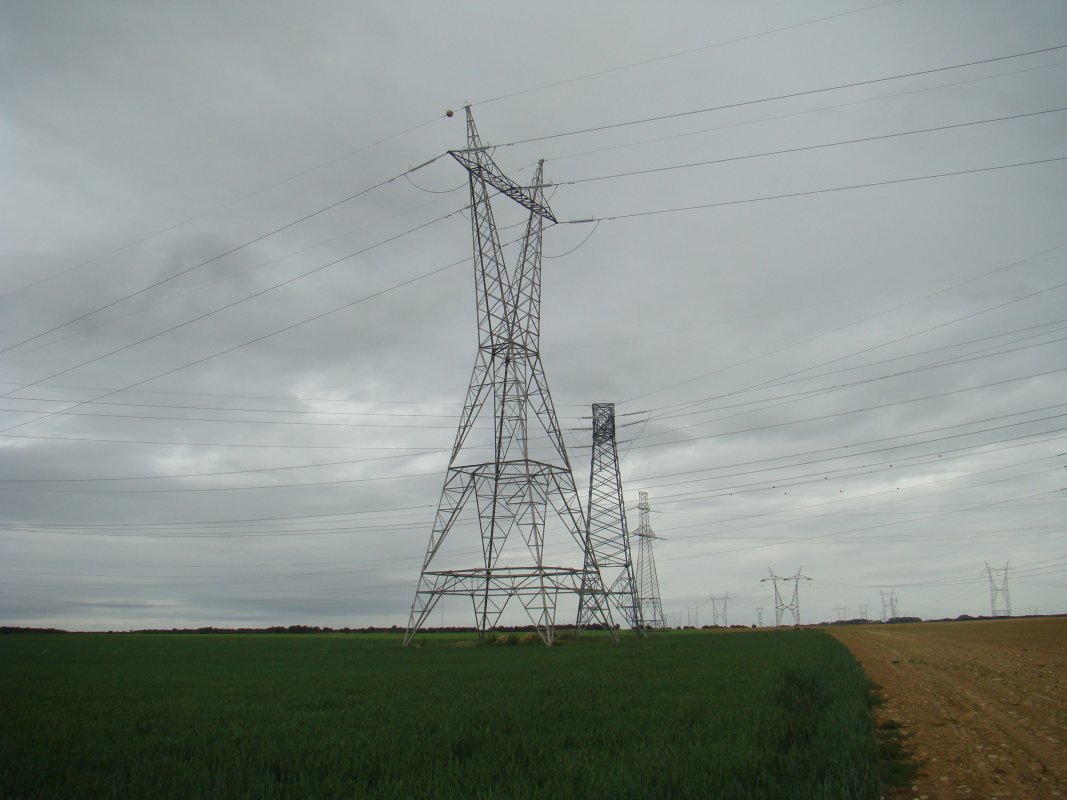
The saturation of Spain’s power grid is not a recent problem. The rapid development of high-energy-consumption industries like data centers and electric vehicle charging stations has continuously pressured the grid. Meanwhile, Red Eléctrica, the company responsible for the high-voltage transmission network, has failed to implement necessary expansion plans in recent years. Its network plan, which was supposed to be released in 2024, has not yet been published, leaving the grid congestion problem unresolved in the short term. Furthermore, distribution companies, dissatisfied with the remuneration framework set by the National Markets and Competition Commission (CNMC), have also refused to cooperate with expansion efforts, with disputes escalating to the legal level.
Regulator Steps In, Sets a Deadline
Facing a deadlock between the grid operator and distribution companies over grid saturation data, the National Markets and Competition Commission (CNMC) decisively intervened last week. The agency overturned a previous decision to postpone the publication of the grid access capacity map, mandating that the relevant parties submit their reports by February 20. Data shows that Red Eléctrica and the distribution companies have only reached an agreement on 26% of the transmission network interconnection points, with this figure dropping as low as 11% in some areas. Against a backdrop of irreconcilable differences, the Sánchez government’s housing promise is very likely to fall at the final hurdle: the ‘last mile’ of wiring that connects homes.
