Japan’s ‘Iron Lady’ Sanae Takaichi Begins New Term
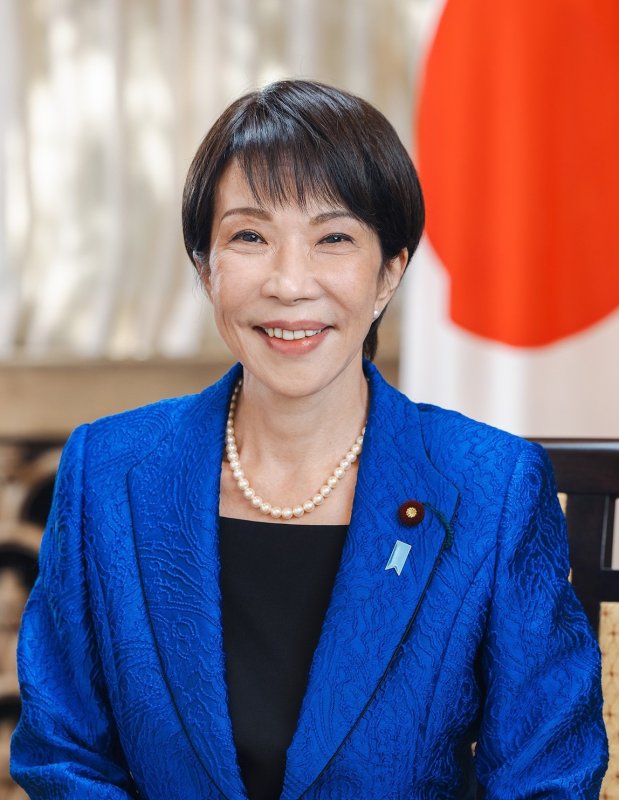
This Wednesday, 64-year-old Japanese politician Sanae Takaichi won the parliamentary prime ministerial election, successfully securing her re-election. Her Liberal Democratic Party had already won 352 seats in the House of Representatives election on February 8, gaining an absolute majority of support. Takaichi, a protégé of former Prime Minister Shinzo Abe, is known for her far-right and hawkish stance, earning her the media moniker ‘Iron Lady.’
Economically, she promotes a more aggressive ‘Takaichinomics.’ In defense and foreign policy, she advocates for increasing the defense budget to 2% of the Gross Domestic Product (GDP), pushing to amend Article 9 of the pacifist constitution, and does not even rule out the possibility of nuclear armament. She views the Japan-U.S. alliance as the cornerstone of her foreign and security policy. Takaichi became Japan’s first female prime minister in 2025, and following this re-election, she is expected to continue her pro-American and hardline domestic and foreign policies.
Vatican Declines Participation in U.S.-Led Gaza Peace Committee
On February 18, Vatican Cardinal Secretary of State Pietro Parolin formally confirmed that the Vatican will not participate in the Gaza peace committee, which was initiated and established by U.S. President Trump. The committee aims to oversee the temporary governance of the Gaza Strip and plans to hold its first meeting in Washington on February 20.
Parolin explained that the Vatican made this decision based on its ‘unique nature and position of neutrality.’ He also pointed out that there are many key issues regarding the committee that remain to be clarified and stressed that handling such international crises should be led by the United Nations. Reportedly, after receiving the invitation on January 21, the Vatican decided to decline after careful evaluation. Although the heads of state or government from 35 countries, including Israel and Argentina, have confirmed their attendance, countries like France, Spain, and Sweden have explicitly rejected the invitation.
Russia-Ukraine Geneva Talks Stall Over Territorial Issues
The third round of Russia-Ukraine peace talks in Geneva concluded this Wednesday without substantial progress. Although both sides reached a minor consensus on a ceasefire verification mechanism, sharp disagreements on the core issue of territory remain. Ukrainian President Zelenskyy has explicitly rejected Russia’s demand for territorial concessions and accused Moscow of deliberately stalling the peace talks. Both sides plan to hold another round of talks in March.
During the negotiations, military conflict continues unabated. The Ukrainian side claims to have shot down a hundred Russian drones, while the Russian side stated that its missiles and drones hit 14 Ukrainian targets. According to statistics, attacks in areas such as Sumy and Donetsk resulted in at least 5 deaths and over 20 injuries within 24 hours. Zelenskyy also called on the international community to strengthen controls on the supply chains for core components of Russian weapons and requested deeper involvement from European countries like the UK, France, and Germany in the negotiation process.
