National Average Price in Spain Approaches Historic High
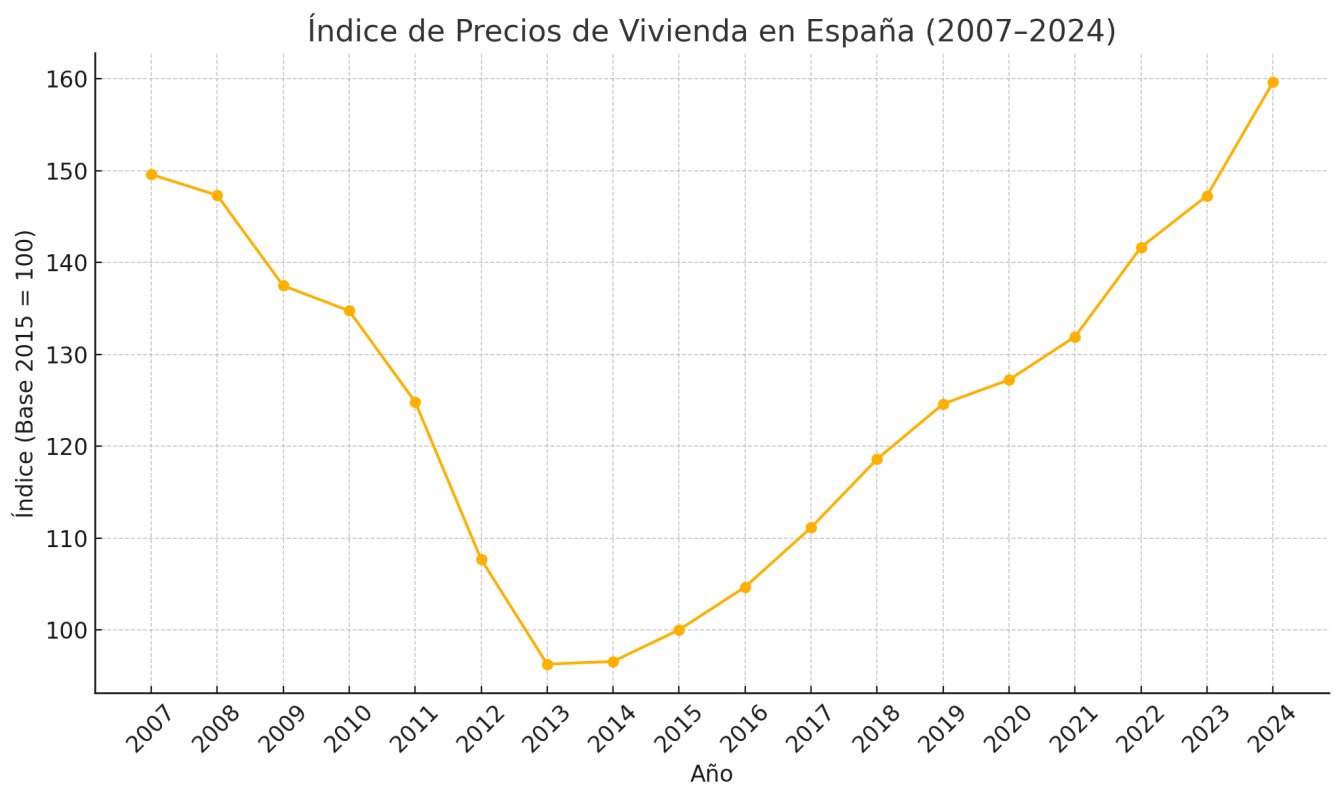
In early 2026, the Spanish real estate market showed strong upward momentum. The latest statistical data reveals that the national average price of second-hand homes climbed to 2,897 euros per square meter in January, representing a massive 20.4% increase compared to the same period last year. This price level is only 1.9% shy of the all-time peak reached during the real estate bubble in April 2007. The rapid overall rise in national housing prices reflects a significant supply-demand imbalance in the current market.
Core Regions and Popular Cities Repeatedly Break Records
Against the backdrop of climbing national average prices, property values in several popular regions and cities have broken their historical ceilings. Among them, the Balearic Islands rank first nationally with an average price of 5,293 euros per square meter; the Madrid region follows closely with an average price reaching 5,225 euros/sqm. Looking specifically at city cores, the unit price of properties in central Madrid has soared to 6,465 euros. Additionally, regions such as Andalusia, the Canary Islands, and Valencia (with an average price of 3,573 euros/sqm) have also shattered their previous price records. Notably, the Murcia region recorded the highest year-on-year growth in the country at 27.1% in January. In contrast, northern regions like Aragon and Navarre remain about 30% below their historical peaks.
Aggravated Supply and Demand Mismatch Drives Up Housing Costs
Regarding this round of substantial price increases, real estate analysts point out that it is the result of multiple overlapping macroeconomic and microeconomic factors. On the demand side, a significant increase in the number of single-person households, continuous population inflows, and market expectations of future interest rate cuts have collectively unleashed massive homebuying demand. However, on the supply side, current inventories of both new and second-hand homes are in a state of severe shortage. This intense supply-demand mismatch continues to raise the barrier to homeownership in core cities, consequently causing buyers’ financial costs and market pressures to increase sharply at the start of 2026.
