The Madrid City Council is currently advancing the final deliberation process for the new Sustainable Mobility Ordinance (OMS). After addressing related objections, the regulation is expected to officially take effect by the end of March this year. The new policy aims to further promote the city’s green transition in transportation by expanding roadside metered parking zones and providing funds for vehicle replacements.
Expansion of Regulated Parking to 22 Peripheral Neighborhoods
Borja Carabante, the delegate for Urban Planning, Environment, and Mobility, confirmed that one of the core measures of the new ordinance is to significantly expand the scope of the Regulated Parking Service (SER) by incorporating 22 peripheral neighborhoods. Seventeen of these neighborhoods will introduce the system for the first time, while the other five will undergo regional expansion to alleviate parking difficulties caused by the “border effect.” This expansion covers various areas, including Latina, Carabanchel, and Usera. Furthermore, Puente de Vallecas and Moratalaz will historically establish paid parking spaces for the first time.
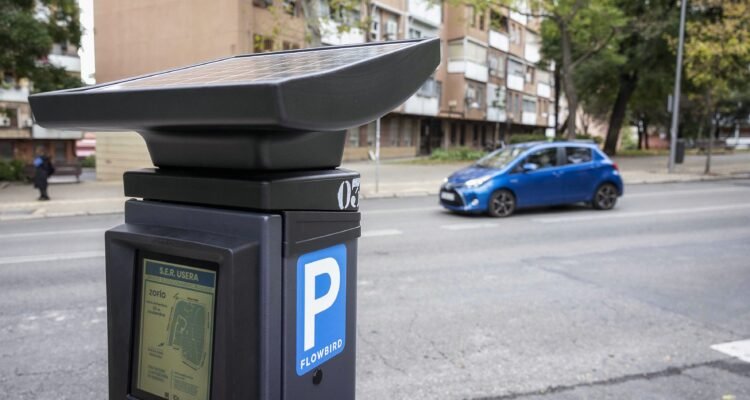
According to long-term plans, Madrid expects to add 11,372 paid parking spaces in some of the currently advancing neighborhoods by 2029. By 2035, with the full implementation of the plans for these 22 new neighborhoods, an additional 66,120 spaces will be created, bringing the total number of new parking spots to nearly 80,000. Additionally, the city government is currently assessing the parking situation in high-demand areas, considering extending the charging hours of parking meters and potentially expanding the service to Sundays and public holidays.
Stricter Restrictions for Low Emission Zones
Regarding environmental traffic restrictions, the new bill includes a more detailed economic impact assessment report. This move legally amends the loopholes of previous versions, consolidating the City Council’s ability to defend the operation of Low Emission Zones (ZBE) against appeals. Under the current traffic restriction framework, the grace period for locally registered vehicles without an environmental label from the Spanish Directorate-General for Traffic (DGT) to drive within the capital area will completely end this December.
Multi-Million Subsidy for Phasing Out Old Vehicles
To mitigate the impact of the new traffic policy on citizens’ mobility, the Madrid City Council has simultaneously planned a financial support scheme for phasing out highly polluting vehicles. This subsidy plan, scheduled to be approved in March, outlines a budget allocating a total of 51.5 million euros in special funds between 2026 and 2027 to support the development of sustainable transportation. A significant portion of these funds—totaling 30 million euros (or 15 million euros annually)—will be directly used to subsidize ordinary citizens in replacing their old private cars, aiming to accelerate the cleanup and modernization of the city’s motor vehicle fleet.
