Core Application Thresholds and Residency Requirements
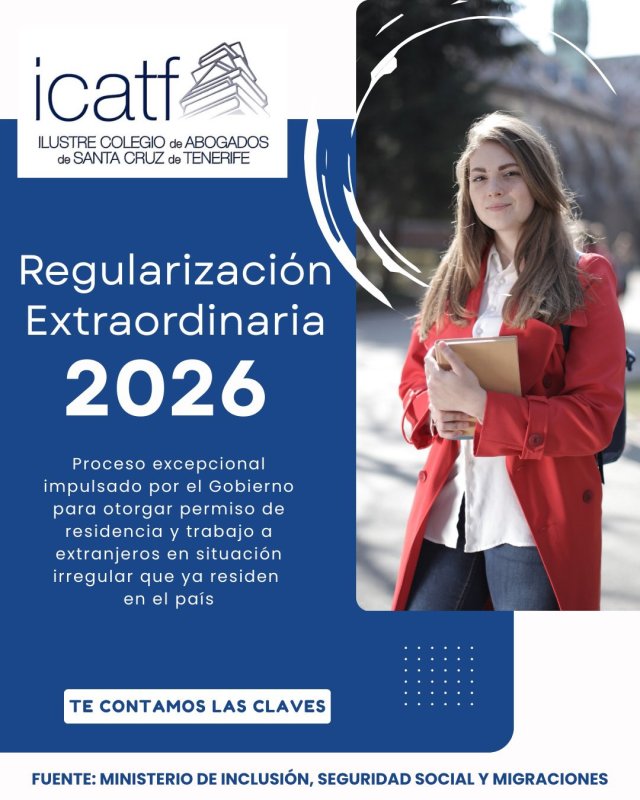
A recently released draft bill by the Spanish government has clarified the strict conditions for the 2026 immigration amnesty. Contrary to previously anticipated leniency, this policy imposes a hard mandate on the duration of residency: applicants must have resided in Spain before January 1, 2026. Those who entered on or after this date will not qualify, and applicants must be physically present in Spain on the day they submit their application.
The most stringent clause is the proof of ‘five months of continuous residence.’ Counting backward from the application submission date, applicants must not have any record of leaving Spain during these five months, not even for a single day. To prove this factual residency, applicants must provide a historical registration certificate (Empadronamiento) covering this five-month period. If there are any gaps in the registration, other legally binding official documents must be provided as supporting evidence.
Excluded Groups and Essential Document Checklist
This amnesty aims to resolve the regularization of undocumented immigrants. Therefore, individuals already holding legal status, such as student visas, non-lucrative residency, or job-search visas, as well as those currently in the process of renewing or modifying their residency, are explicitly excluded from applying. Furthermore, minors cannot submit applications independently; they must apply alongside eligible parents acting as the primary applicants. If an applicant is currently processing an Arraigo residency or renewing an existing permit, they must voluntarily withdraw their original application to participate in this amnesty.
Regarding document preparation, official requirements include a fully scanned copy of the applicant’s passport and police clearance certificates from all countries lived in over the past five years. These transnational documents must be legalized with an Apostille.
Approval Timeline and Resulting Social Issues
The government expects to officially open the amnesty application portal in April 2026, with a tentative deadline of June 30, 2026. Approved applicants will receive a one-year temporary residence permit, during which they are legally allowed to be employed or start their own business. Upon expiration, this permit can be converted into standard residence types, such as an employee work permit or a self-employed work permit, following standard regulations.
It is estimated that this amnesty will attract over 500,000 foreign nationals to apply. Due to the anticipated surge in workload, the Spanish immigration office is already facing immense pressure from staff shortages. Currently, appointments at municipal registries in major cities like Madrid are fully booked, which has even spawned a black market for scalping appointment slots (Citas) at high prices, sparking local community concerns over the overloaded system.
Simultaneously, the bill continues to face political resistance. Some right-wing political parties have explicitly voiced opposition to this large-scale regularization effort and may potentially file a lawsuit with the Spanish Supreme Court to annul the bill in the future. Therefore, before the final law is officially enacted, specific implementation details may still be subject to change.
