According to 2025 data released by the Spanish Ministry of Economy, Trade and Business, Spain faces severe disruptions to its annual imports of crude oil, natural gas, and other derivative fuels valued at 5.17 billion euros due to Iran’s blockade of the Strait of Hormuz. This sudden geopolitical event is forcing European nations to reassess the security of their energy supply chains.
Chain Reaction of Severing the Global Energy Artery
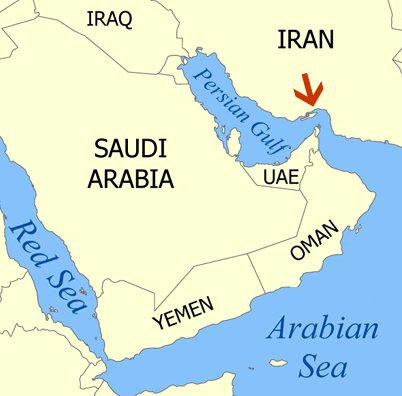
The Strait of Hormuz is the absolute core hub of international energy trade, routinely handling about one-third of the world’s seaborne crude oil. The closure of this maritime choke point has not only devastated multiple national economies but also pushed Spain into a passive position. Highly dependent on fossil fuels passing through these waters, Spain’s 5.17 billion euros in annual energy procurement is directly impacted by the sailing ban.
Impact on Spain’s Major Middle Eastern Energy Suppliers
Spain imports substantial amounts of oil and natural gas from Persian Gulf coastal states. Among the trade partners affected by this blockade, Saudi Arabia is the largest supplier, to which Spain pays 2.4449 billion euros annually for fuel. Other significantly affected nations include Iraq (1.4137 billion euros) and Kuwait (865.5 million euros). Furthermore, Qatar and the United Arab Emirates export energy products to Spain worth 227.1 million and 220.1 million euros annually, respectively.
Limitations of Alternative Transport Routes
To mitigate the shipping crisis, some oil-producing nations are attempting to activate backup routes, but overall pipeline capacity struggles to offset the massive shortfall in maritime transport. Saudi Arabia’s East-West Pipeline and Iraq’s pipeline to Turkey’s Ceyhan port both face strict capacity limits. The United Arab Emirates can route crude oil to the Gulf of Oman via the Habshan-Fujairah pipeline, while Kuwait and Qatar are left with no viable alternative routes.
In the liquefied natural gas (LNG) sector, Spain’s situation is relatively stable. Because its natural gas procurement is highly diversified, primarily sourced from the United States and Algeria, its direct reliance on nations bordering the Strait of Hormuz is lower.
Great Power Games and Divergent Energy Security
Different economies exhibit varying levels of resilience to this strait blockade. As a massive energy consumer, China is highly dependent on raw materials from this region, suffering impacts far exceeding those of Spain and other European nations. In contrast, the United States, backed by exceptional domestic energy self-sufficiency, has demonstrated strong resilience during this crisis. Additionally, following the arrest of Venezuelan President Nicolas Maduro, the US swiftly initiated negotiations with Venezuela, successfully securing a reliable supplemental energy alternative for itself.
