I was chatting with a friend recently, and a slightly crazy idea popped into my head: what if we pooled our money to open a private university in Spain specifically for international students, focusing on Spanish language and business studies? Is that even feasible? I know it sounds like a pipe dream, but when you think about it, Spain’s education market has huge potential, especially in Spanish language teaching. However, dreams are one thing, and harsh reality is another. Starting a university in Spain isn’t as simple as renting a building and hiring a few teachers.
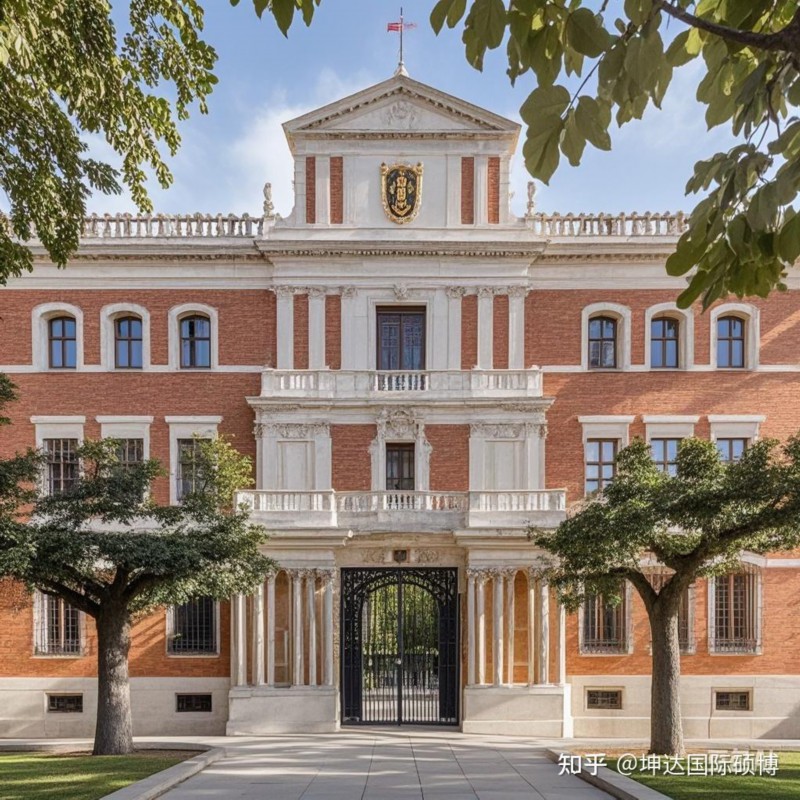
First, you have to get through the legal hurdles. Spain’s higher education system is under strict dual regulation by both the state and the autonomous communities. To establish a university that can grant official degrees, you need approval through parliamentary legislation. The entire process is long and complex, requiring the submission of detailed academic plans, proof of faculty qualifications, facility planning, and a financial feasibility report. Every single step must be taken carefully within the legal framework.
Core Approval Process for Founding a University
In all the approval stages, there’s one body you absolutely cannot bypass: ANECA (the National Agency for Quality Assessment and Accreditation of Spain). This agency is the ultimate ‘gatekeeper’ of Spanish higher education. The majors your university plans to offer, the scientific validity of your curriculum, whether your teachers have the required Ph.D.s and research achievements, and even the adequacy of your physical facilities and library collections—all must be evaluated and approved by ANECA and its subordinate bodies. Their assessment report is the key basis for parliamentary approval. You could say that if you get ANECA on board, you’re more than halfway there.
To give you a more direct overview, I’ve put together a simplified table of the process and requirements:
| Item | Basic Requirement | Remarks |
|---|
| Legal Entity | Must be a legal entity; can be for-profit or non-profit. | Private universities usually exist as foundations or commercial companies. |
| Faculty | A certain percentage of teaching staff must hold a Ph.D. | Teachers must be accredited by ANECA. |
| Facilities | Must have standard-compliant buildings, labs, a library, etc. | Ownership or long-term lease contracts for land and buildings are mandatory. |
| Program Offering | Must offer at least 8-10 official bachelor’s degrees. | Must cover at least three main fields of knowledge. |
| Financial Guarantee | Must provide proof of sufficient funds to ensure continuous operation. | This is no small sum, typically starting in the tens of millions of euros. |
Ultimately, opening a university in Spain is not just a massive educational project, but also a colossal capital investment. Beyond the initial approval and construction, the subsequent challenges of operation, student recruitment, brand building, and competing with numerous long-established public universities are even more daunting. I personally think the biggest challenge isn’t funding, but rather establishing academic reputation and brand trust, especially when competing with the legacy of institutions like the universities in Spain founded by the Pope. What do you all think? Feel free to share your thoughts in the comments below!
