Escalating Military Action in the Middle East Shakes Global Energy Markets
Tensions in the Middle East have escalated sharply this week. Reports indicate that the United States and Israel launched a joint military strike against targets within Iran, including an attack on the world’s largest natural gas field, South Pars. The move triggered an immediate and dramatic reaction in international energy markets, with oil and natural gas prices soaring.
Iran confirmed that the attack resulted in the deaths of several high-ranking officials, including its intelligence chief, and condemned the action as a major provocation. In response, Iran launched missiles at Tel Aviv, Israel, causing casualties. Simultaneously, Iran expanded its military retaliation to several Gulf countries, including Iraq, Qatar, and the UAE. Furthermore, an Israeli airstrike on Beirut, Lebanon, also resulted in civilian casualties, signaling that the conflict is rapidly evolving into a regional crisis.
Spain Pledges Additional €1 Billion in Military Aid to Ukraine
Ukrainian President Zelenskyy made his fourth visit to Spain on Wednesday, March 18, 2026, where he met with Spanish Prime Minister Pedro Sánchez. Following the meeting, Sánchez announced that Spain will provide Ukraine with a bilateral military aid package worth €1 billion. This brings Spain’s total aid to Ukraine to €4 billion.
The aid funds will be partially sourced from the EU’s European Peace Facility and will focus on supporting the joint production of key defense equipment between Spain and Ukraine, such as drones, missiles, and radars. During his visit, Zelenskyy also met with King Felipe VI of Spain. He urged the EU to promptly release the already committed €90 billion in aid, pointing out that the Middle East crisis has already impacted weapon supplies to Ukraine and stressing the critical importance of the air defense systems provided by Spain.
Severed Fiber Optic Cables Cause Widespread Paralysis of Madrid’s High-Speed Rail Network
On Wednesday morning, the high-speed rail network in Spain’s capital, Madrid, descended into chaos due to a signaling system failure. All high-speed lines originating from or terminating in Madrid experienced severe delays, with some services delayed by over two hours, affecting the travel plans of a large number of passengers.
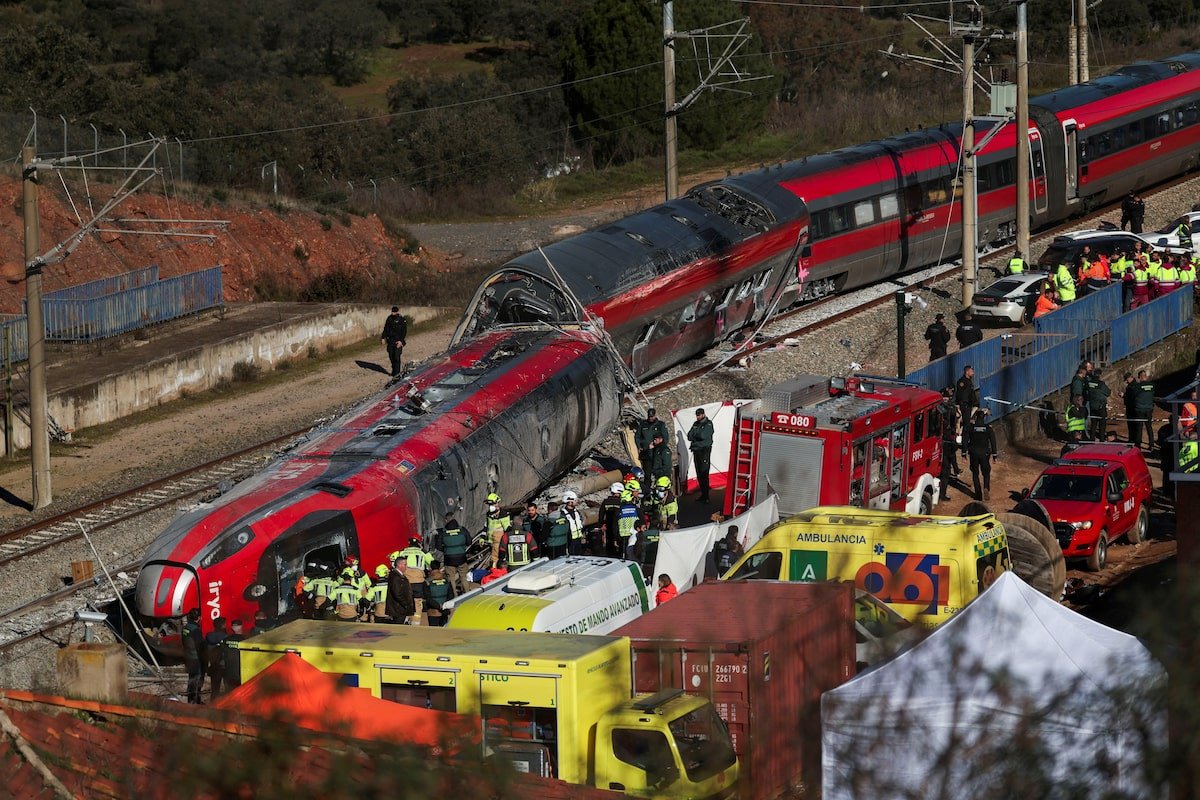
The failure occurred around 8:00 AM. An investigation revealed that it was caused by maintenance personnel from a contractor for Adif, the railway infrastructure manager, who accidentally severed multiple fiber optic cables during their work. This led to a complete paralysis of the signaling system at Madrid’s Atocha traffic control center. Although Adif urgently activated local control measures to manage train movements, the system only began to gradually recover at 9:50 AM, with operations on all services continuing to be affected. The incident caused major crowding at Atocha station and drew criticism from the opposition party regarding the current government’s poor infrastructure management.
Polish Government Launches Nationwide Civil Defense Education
To address growing security threats, the Polish government is mailing a civil defense booklet titled “Safety Guide” to approximately 17 million households across the country. The initiative aims to enhance the public’s self-rescue and mutual aid capabilities during various crises.
The guide provides detailed information on how to respond to a wide range of emergencies, from natural disasters, fires, and floods to cyberattacks and even air raids. Specific instructions include how to prepare an emergency go-bag, find a shelter, store food, and maintain communications. Officials state that this measure is part of strengthening the nation’s overall resilience to multiple challenges, including disinformation and tensions with neighboring countries. To ensure broad coverage, the guide will be available in Ukrainian and Braille, in addition to the standard Polish version.
