The Fallas of Valencia (Fallas) stands as one of Spain’s most significant and influential city festivals. Its remarkable impact across economic, tourism, and cultural spheres has made it a dazzling international icon.
A Powerful Economic Engine: An Annual Contribution of Over €700 Million
The Fallas festival demonstrates a powerful economic stimulus effect. According to relevant statistics, the festival contributes approximately €732.6 million to the local economy each year. Behind this figure lies around €400 million in direct spending and approximately €62 million in revenue from the hospitality sector. The tourism boom during the festival is significant; for instance, in March 2025, the average hotel occupancy rate is projected to exceed 75%, nearing 89% during peak periods, proving its core role as an economic growth driver.
An International Cultural Magnet: An Annual Gathering of a Million Visitors
Each year, the Fallas festival draws over one million visitors to Valencia, with its international appeal being particularly prominent. Data shows that foreign tourists account for 56.6% of visitors, surpassing the 43.4% of domestic Spanish tourists. Visitors from European countries such as Germany, the United Kingdom, Italy, and France form the majority of international guests. This global draw earned the festival the designation of a “Festival of International Tourist Interest” in Spain as early as 1965, highlighting its worldwide cultural influence.
A Symphony of Gunpowder: A Sensational Pyrotechnic Display
Pyrotechnics are an indispensable core element of Fallas culture, celebrated as Valencia’s “gunpowder culture.” The festival’s signature events, like the “Nit del Foc” (Night of Fire), can use up to 1,400 kilograms of gunpowder in a single firework display. The daily midday “mascletà”—a thunderous firecracker show—can reach noise levels of 135 decibels, offering spectators a powerful auditory experience, with some of the larger shows even setting historical records.
Ephemeral Giants: The Cycle of Creation and Cremation
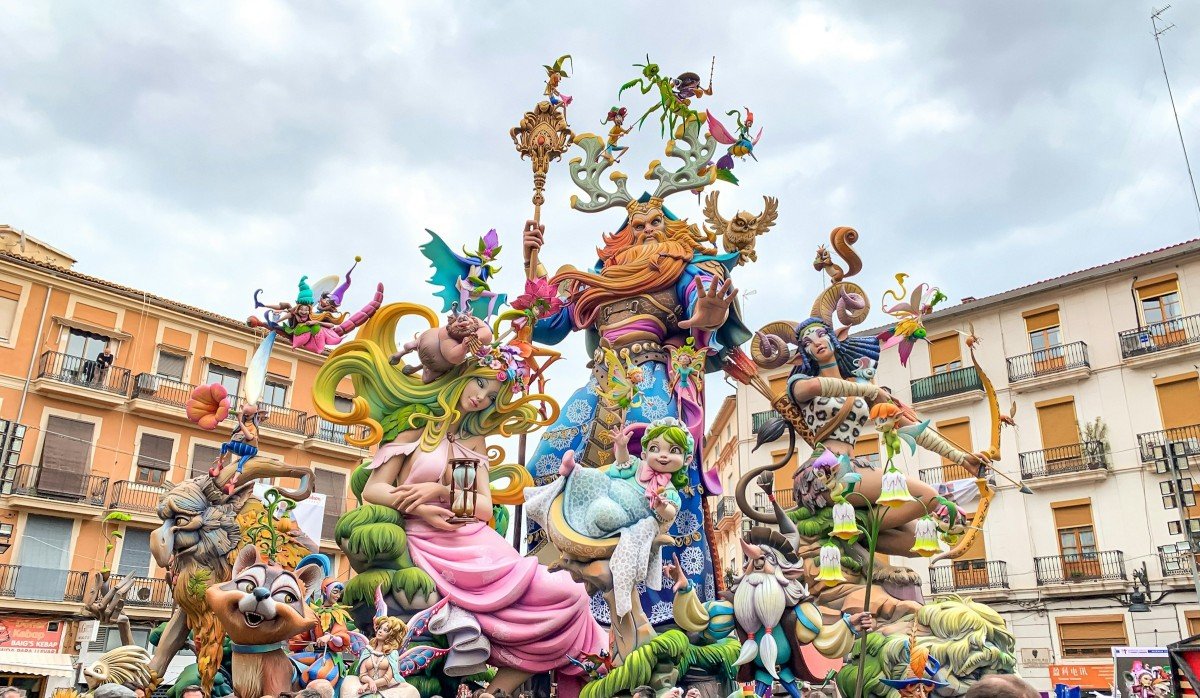
The soul of the Fallas festival lies in its central art form: the monumental papier-mâché sculptures (Fallas monumentos). Each year, around 794 “fallas” are erected throughout the city, with the largest pieces reaching heights of up to 42 meters. These artworks, blending satire, humor, and social commentary, have a projected total construction budget for 2026 that has set a new record of approximately €9.7 million. The festival culminates on the “Cremà” (the burning), where all the fallas are set ablaze. This unique cycle of “creation, exhibition, and destruction” symbolizes renewal and the rebirth of the community.
Community-Driven Heritage: The Fallas Committees and UNESCO Status
The success of the Fallas festival is rooted in its deep community foundations. Valencia has over 120,000 registered members of Fallas committees, known as “falleros,” who are the driving force behind organizing parades, the “Ofrenda” (flower offering) ceremony, and other traditional activities. It is this widespread public participation and social cohesion that led to the festival being officially inscribed on UNESCO’s Representative List of the Intangible Cultural Heritage of Humanity in 2016, making it a vital cultural emblem that Spain presents to the world.
