Major Adjustments to Economic Forecasts: Slower Growth, Rising Inflation
According to the latest macroeconomic projections released by the European Central Bank (ECB) on March 20, 2026, geopolitical tensions in the Middle East are having a significant impact on the Eurozone’s economic outlook. The bank has lowered its 2026 Gross Domestic Product (GDP) growth forecast for the region from 1.2% to 0.9%. At the same time, the inflation outlook is more pessimistic, with the 2026 inflation rate forecast revised upward from 1.9% to 2.6%, a clear deviation from the ECB’s medium-term target.
Risk Warning for an Adverse Scenario
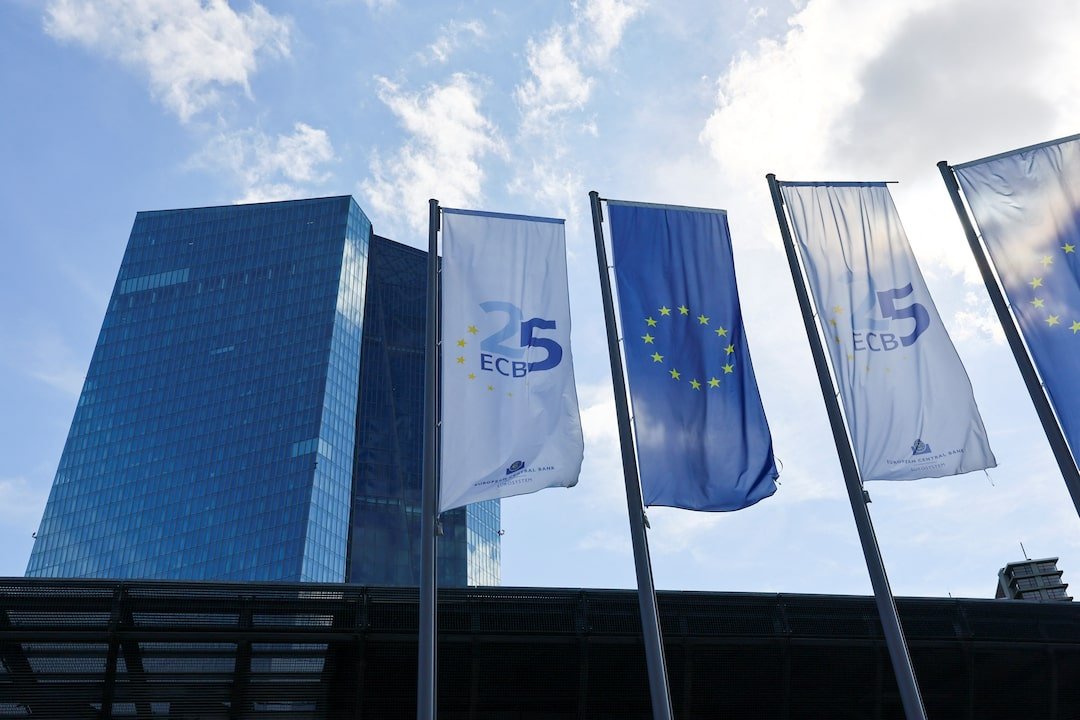
In its report, the ECB simulated an adverse scenario of an escalating conflict, issuing a stark warning. Should the conflict in the Middle East persist and lead to a blockade of the crucial energy shipping lane, the Strait of Hormuz, the Eurozone economy would face a severe shock. Under this scenario, inflation in 2026 could surge to 4.4%, while economic growth would nearly stagnate at a mere 0.4%. Looking ahead to 2027, even if GDP growth recovers slightly to 0.9%, inflation could remain at a high annual average of 4.8%, highlighting the persistence of price pressures.
Interest Rates Held Steady to Counter Uncertainty
Faced with a highly uncertain external environment, the ECB’s Governing Council opted for a cautious stance, deciding to hold the three key interest rates steady. The rates on the deposit facility, main refinancing operations, and marginal lending facility will remain at 2.00%, 2.15%, and 2.40%, respectively. Officials stated this decision provides policymakers time to fully assess the actual impact of geopolitical conflicts on the Eurozone’s economic activity and inflation path, thus preserving future monetary policy flexibility. While February’s overall Consumer Price Index (CPI) for the EU stood at 1.9%, suggesting some economic resilience, the future policy direction will be strictly data-dependent and subject to risk assessment.
Market Expectations and Future Outlook
The ECB’s prudent stance reflects the complexity of the current situation, and market expectations regarding future monetary policy are consequently divided. An analyst from Aberdeen Investments noted that a prolonged conflict in the Middle East could force the ECB to implement at least one interest rate hike by the end of 2026 to contain a potential inflationary spiral. The exact timing and scale of such a hike, however, would depend entirely on the evolving situation. Overall, the ongoing geopolitical risks indicate that Eurozone residents and businesses will likely face the dual predicament of increased living and operational costs combined with slower economic growth for the foreseeable future.
