DGT Upgrades Surveillance System, Veloláser Becomes a New Enforcement Tool
According to reports from March 20, 2026, to ensure traffic safety during the upcoming Semana Santa (Holy Week) long holiday, Spain’s Dirección General de Tráfico (DGT) has upgraded and strengthened its traffic monitoring network nationwide. The highlight of this operation is the large-scale deployment of a new generation of micro-speed radars known as “Veloláser”. Due to their excellent stealth capabilities and high enforcement efficiency, these devices have become the core equipment in the DGT’s latest round of strict traffic enforcement actions.
Unveiling the “Stealth Radar”: Technical Specs and How It Works
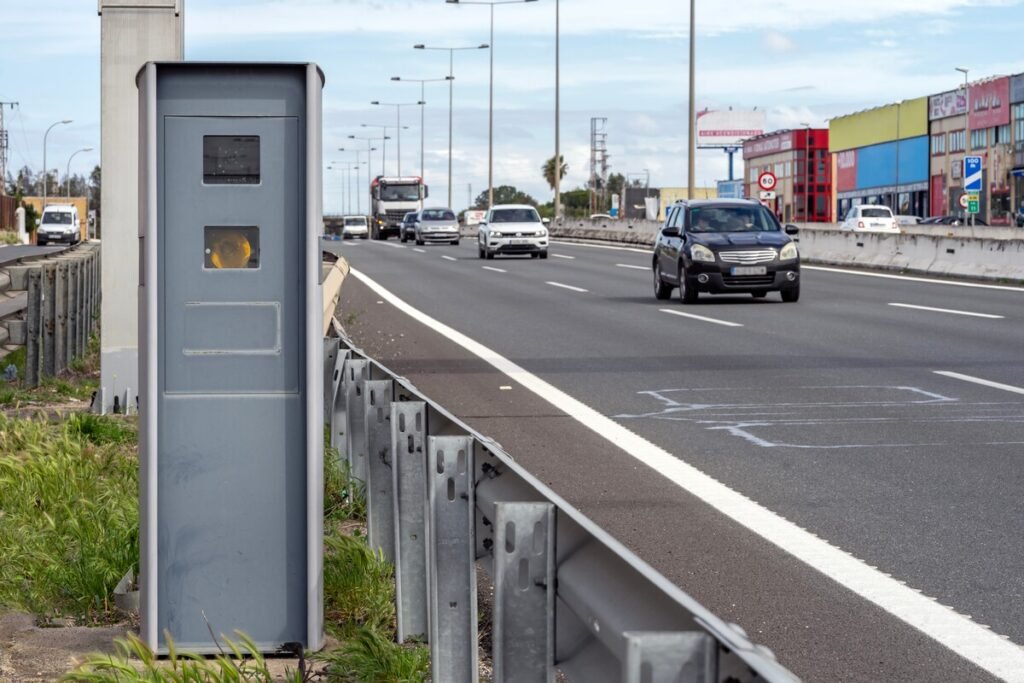
The reason Veloláser radars are difficult for drivers to detect lies in their unique design and advanced technology. The main features of the device include:
- Compact Design: At just 50 cm tall, their small size allows them to be easily hidden behind guardrails, traffic signs, or even in roadside bushes.
- Long-Range Precision: Using advanced laser technology, their effective range for speed detection exceeds 1 kilometer, allowing them to measure a vehicle’s speed before it even comes into the driver’s line of sight.
- High Flexibility and Automation: The devices connect to the traffic control center in real-time via a 4G network and have a built-in high-capacity battery for extended autonomous operation. Officers can place them at a target location and operate them remotely without a police car present. They can even be mounted on unmarked civilian vehicles for mobile enforcement, rendering traditional navigation app warnings almost useless.
Deployment Strategy and Peak Times
According to historical data analysis from the third-party traffic information platform SocialDrive, the deployment of Veloláser radars shows high mobility and strategic placement. Typically, a device stays at one location for an average of about 70 minutes before being quickly moved to the next spot. This “flash” enforcement style makes it difficult for drivers to predict their locations. The key monitoring periods are usually concentrated in two peak windows: from 8:00 AM to 1:00 PM and from 5:00 PM to 9:00 PM. In terms of location selection, the DGT tends to place them on long, straight sections of road with good visibility and road conditions, as these are often where drivers are most likely to relax their guard and speed.
“Air-Ground” Integrated Surveillance Network
In addition to the ground-based Veloláser radars, the DGT’s surveillance strategy extends to the air. During this Holy Week safety operation, a large number of drones equipped with high-definition cameras will work in coordination with regular patrol helicopters. This creates a three-dimensional surveillance network from low to high altitudes. This “air-ground” monitoring system covers highways and major national roads, aiming to capture all types of traffic violations, including speeding, from every angle and without blind spots.
Official Goal: Ensuring Holiday Travel Safety
The DGT emphasizes that the primary goal of this intensified enforcement campaign is not to increase fine revenue, but to prevent and reduce serious traffic accidents caused by dangerous behaviors like speeding, especially during Holy Week, one of the busiest travel periods of the year. For everyone planning to travel during the holiday, the most reliable safety measure is always to strictly adhere to traffic laws, maintain a safe following distance, and refrain from speeding. Officials remind all drivers that obeying speed limits is the most effective way to ensure their own safety and the safety of others.
