US Issues Ultimatum, Threatens Military Strike
On Sunday, U.S. President Donald Trump issued a stern 48-hour ultimatum to Iran via his social media platform, Truth Social, demanding the complete reopening of shipping lanes in the Strait of Hormuz. Trump warned that if Iran fails to comply, the United States will attack its power plants, ‘starting with the biggest.’ He had previously claimed significant progress in military operations, stating that the U.S. strategy was ‘weeks ahead of schedule’ and that he had already ‘wiped Iran off the map,’ destroying its leadership, navy, and air force.
Despite describing the reopening of the strait as a ‘very simple military operation,’ Trump also admitted that ‘a lot of help’ is needed and pointed out that the North Atlantic Treaty Organization (NATO) has the capability but ‘lacks the courage’ to act.
Spain’s Urgent Appeal and Warning of a Global Energy Crisis
Hours after the U.S. ultimatum, Spanish Prime Minister Pedro Sánchez issued a public statement, urgently demanding the reopening of the Strait of Hormuz and emphasizing the need to ‘protect all energy resources in the Middle East.’ Sánchez gravely noted, ‘We are at a global turning point,’ and warned that a further escalation could trigger a long-term energy crisis affecting all of humanity.
The Spanish government has made it clear that the world should not pay the price for this conflict. Just two days prior, the Sánchez administration announced the mobilization of €5 billion to mitigate the economic impact of the conflict with Iran. He warned at the time that rising fuel prices were the first signs of a ‘global economic earthquake’ triggered by the conflict.
Conflict Background and International Response
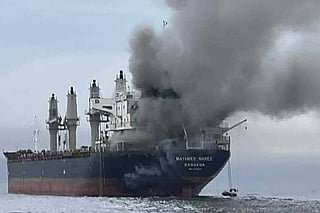
The current crisis is a continuation of military actions taken by the U.S. and Israel against Iran since February 28. In retaliation for the U.S.-Israeli offensive, Iran’s Revolutionary Guard has repeatedly claimed responsibility for attacks on ships within the strait and has stated it will expand its targets to include Israeli territory and U.S. military bases in the Middle East.
The international community has had a mixed reaction to the escalating tensions. Last Thursday, the European Council authorized some EU member states to contribute to safeguarding the freedom of navigation in the Strait of Hormuz ‘when conditions are appropriate.’ Meanwhile, the EU has called on all parties to the conflict to work towards de-escalation and to ‘fully respect international law.’ However, with the closure of the strait, a vital artery for global energy, the world economy is already feeling the painful consequences.
