Rising Inflation and the Erosion of Purchasing Power
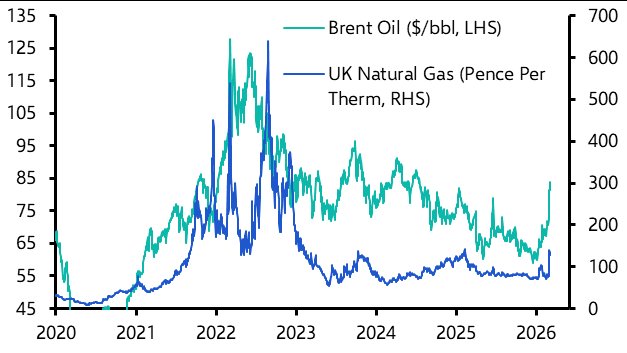
As geopolitical conflict in the Middle East spreads, its negative impact on the global economy is now being felt in Spain. Economist Alfredo Barandiarán points out that the resulting surge in global oil prices is directly pushing up Spain’s inflation rate. He forecasts that if the current situation is not de-escalated, Spain’s price increase could break the 3% barrier by the summer of 2026. This means that even if residents’ nominal income remains unchanged, their purchasing power will decline due to rising prices, facing the real risk of a ‘stealth impoverishment’.
Chain Reaction in Financial Markets: Increased Credit Costs
Beyond the consumer sector, financial markets have also reacted swiftly to external risks. The Interest Rate Swap (IRS), a key benchmark for banks to hedge risks and price loans, rebounded significantly after the conflict escalated on March 2nd, with its rate climbing from 2.303% to 2.499% within days. This change indicates that banks’ expectations for future financing costs are rising. Consequently, banks are likely to pass these costs on to consumers, leading to higher interest on personal loans, credit cards, and mortgages, thereby increasing the debt burden for Spanish households and businesses.
Case Study: The Wealth Erosion Effect of Long-Term Inflation
The corrosive effect of inflation on savings is particularly evident in the long term. According to calculations, Spain’s average annual inflation rate has been approximately 4.10% since 2021. Based on this figure, we can clearly see the speed of currency devaluation:
Scenario One: Savings with Interest
Suppose a deposit of €100,000 is placed in a fixed-term account with a 2% annual interest rate. After 30 years, although the account balance will grow to about €160,000, its real purchasing power will have shrunk significantly due to persistent inflation, being equivalent to only about €48,000 today.
Scenario Two: Non-Interest-Bearing Current Account
If the same €100,000 is simply kept in a current account with no interest, the situation is even more dire. After 30 years, its purchasing power is projected to fall to less than €30,000, representing an ‘invisible loss’ of wealth exceeding 70%.
Expert Advice: Prudent Planning for Economic Uncertainty
Faced with a macroeconomic environment of both rising prices and interest rates, economists are reminding the Spanish public, especially those with significant Euro savings, to be highly vigilant about this ‘invisible loss of wealth’ caused by inflation. In the current economic climate full of uncertainty, how to counter risks through reasonable household budget planning, prudent financial management, and diversified asset allocation has become a critical issue that every Spanish family must confront and begin to address.
