During a media interview at the Mobile World Congress (MWC 2026) in Barcelona, Spain on March 2nd, Lu Weibing, Partner and President of Xiaomi Group, detailed the company’s overseas strategy for Xiaomi Auto, the globalization of its new retail model, and his perspective on current industry challenges.
Targeting 2027: Europe as the First Stop for Globalization
In the interview, Lu Weibing clearly stated that Xiaomi Auto plans to officially enter the European market in 2027. He pointed out that Xiaomi’s globalization path will follow the principle of ‘tackling the hardest part first,’ viewing Europe as the initial fortress to conquer. Taking the German market as an example, local brands hold 60% to 70% of the market share, posing a significant challenge for foreign brands. However, Xiaomi believes that only by succeeding in the toughest markets can it lay a solid foundation for subsequent global expansion.
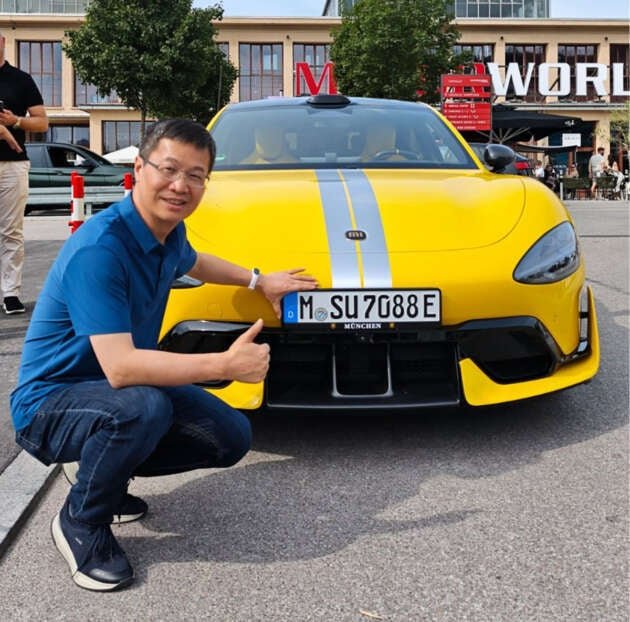
Although not yet officially on sale, the Xiaomi SU7 has already built some brand recognition in Europe. Lu Weibing mentioned that some ‘Mi Fans’ have already imported the vehicle from China to countries like the UK and Germany through private channels. When he drove the car in Germany himself, its high-recognizability also drew considerable attention. To ensure a smooth market entry, Xiaomi established a preparatory team for its automotive overseas expansion in 2025, personally led by Lu Weibing, to handle complex matters such as certification, local adaptation, and compliance.
New Retail Goes Global Under the ‘Human x Car x Home’ Ecosystem
The overseas expansion of Xiaomi Auto is not just about isolated product sales; it’s a crucial part of the globalization of its ‘Human x Car x Home’ ecosystem strategy. Lu Weibing compared Xiaomi’s new retail model to a highway leading to global markets, carrying its entire product lineup, including cars, with the goal of providing a consistent, high-quality experience for users worldwide.
Currently, Xiaomi has brought its ‘New Retail’ model, successfully proven in the Chinese market, to the world, opening physical stores in dozens of countries and extensively covering core markets in Southeast Asia, Europe, and Latin America. This strategy marks a new phase in Xiaomi’s globalization, evolving from the early stages of exporting products and brands to the deeper level of exporting its business model.
Technological Synergy: Humanoid Robots ‘Interning’ in the Car Factory
Xiaomi’s investment in foundational technologies has created synergies across its business lines. A video released on March 2nd shows that Xiaomi’s self-developed humanoid robot has entered its car factory’s die-casting workshop for an ‘internship.’ At a station for assembling self-tapping screws, the robot can operate autonomously for three consecutive hours with a 90.2% installation success rate. Its operational speed matches the factory’s takt time of producing one car every 76 seconds, initially demonstrating its ability to work collaboratively on the production line.
Lu Weibing revealed that the company’s foundational technologies in areas like chips, operating systems, and robotics share significant common ground, paving the way for the future intelligence and large-scale application of robots. He predicts that within the next five years, humanoid robots could be deployed on a large scale across Xiaomi’s various production lines.
Industry Challenges: Responding to Sustained Memory Price Hikes
Addressing the recent and widely noted issue of rising memory prices, Lu Weibing stated that the speed and scale of this price hike have surpassed any previous cycle. As of the first quarter of 2026, the global price quotes for memory products have reached nearly four times the level of the same period last year, and this trend is expected to continue until the end of 2027.
He analyzed that the sharp increase in memory costs will inevitably be passed on to the retail prices of end devices, putting pressure on almost all consumer electronics, including smartphones, tablets, and TVs. In particular, memory costs account for a higher proportion of the total cost of low-end products, meaning these product lines face greater pressure. Lu Weibing believes that thanks to the progress Xiaomi has made with its high-end strategy in recent years, the company is in a relatively advantageous position to cope with this cost increase.
