The Heavy Economic Toll of the War
In his speech to Parliament this Wednesday, Spanish Prime Minister Pedro Sánchez quantified the severe impact of the month-long war in Iran on the national economy. According to the data he provided, Spanish businesses have suffered losses exceeding €100 billion, amounting to an average daily loss of nearly €5 billion. The capital markets have also reacted sharply, with Spain’s benchmark IBEX 35 index falling by a cumulative 9% during this period.
Furthermore, the chain reactions triggered by the war have permeated all sectors of the economy. Soaring energy prices have directly driven up the cost of oil and gas. Prices for key industrial raw materials, such as fertilizers and argon, have also risen across the board, putting pressure on the agriculture and high-tech industries. Tourism, a pillar of the Spanish economy, along with transportation sectors like shipping and aviation, have not been spared and have all been severely impacted.
A €5 Billion Anti-Crisis Decree Hangs in the Balance
To address the economic hardships brought by the war, the Spanish government has approved an anti-crisis decree totaling €5 billion. In his speech, Sánchez emphasized the exceptional nature of these funds. He pointed out that had the war not broken out, this substantial sum could have been used to invest in public welfare projects, such as increasing scholarships, building new hospitals, or improving road infrastructure. However, these funds must now be used to mend the economic fissures caused by the war.
The final enactment of the decree requires parliamentary approval, with the corresponding vote scheduled for Thursday. This makes Sánchez’s speech not just a review of the economic situation, but also a crucial step in rallying parliamentary support.
Learning from History: Sánchez Slams Opposition’s Stance
Sánchez dedicated a significant portion of his speech to drawing parallels between the current situation and the 2003 Iraq War. He recalled February 15, 2003, when millions of Spaniards took to the streets to clearly express their “No to War” stance. He harshly criticized the then-People’s Party government, led by Prime Minister Aznar, for dragging Spain into the war against public opinion, and accused its motivation of being “to make themselves feel important.”
He used this to aim his criticism at the current main opposition parties—the People’s Party (Partido Popular) and Vox, warning that they are repeating historical mistakes. Sánchez cited polling data to draw a contrast, pointing out that only 6% of Spaniards supported the Iraq War then, whereas 65% oppose the war in Iran today. He stated in harsh terms: “To remain silent in the face of an unjust and illegal war is not prudence, nor is it loyalty; it is cowardice and complicity.”
Political Standoff on the Eve of the Vote
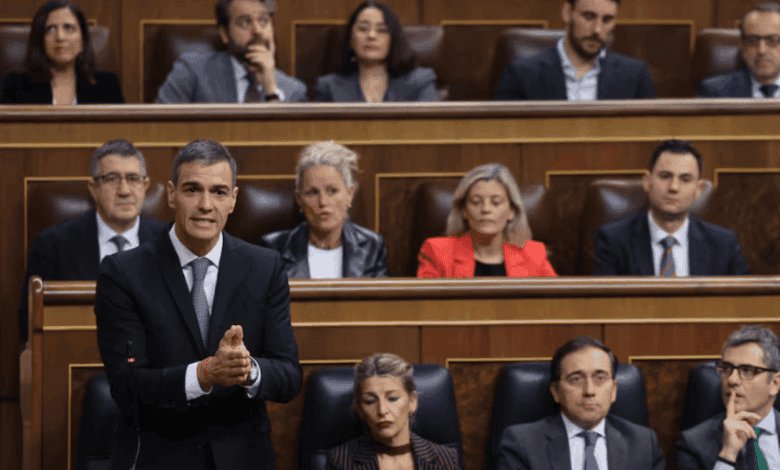
Although Sánchez urgently needs votes, including from the People’s Party, to ensure the €5 billion anti-crisis decree passes in Thursday’s vote, his speech did not adopt a conciliatory tone, but was instead filled with sharp criticism of the opposition.
He launched personal attacks directly at People’s Party leader Feijóo and Vox leader Abascal. This “scolding”, hardline stance adds more uncertainty to the upcoming parliamentary vote. Regardless of the outcome, Sánchez concluded his speech by reiterating his core position: opposition to the war and to any action that violates international law. The shadow of this war has already profoundly affected Spain’s economic and political landscape.
