Detailed Time Change Schedule
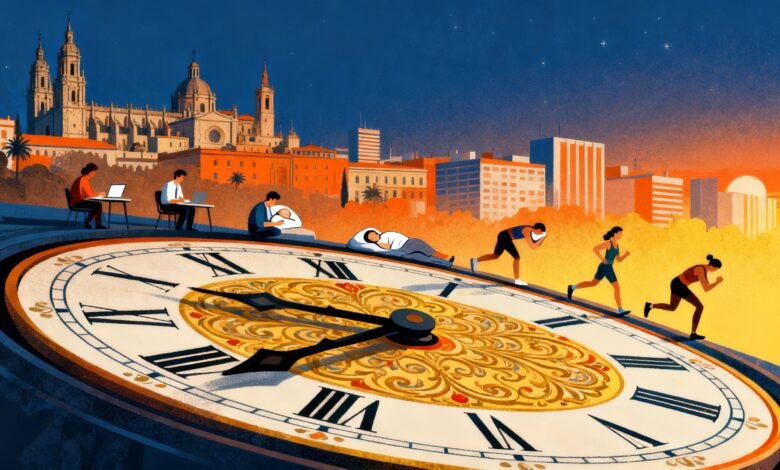
As scheduled, Spain will switch to Daylight Saving Time in the early hours of Sunday, March 29, 2026. At 2:00 AM, clocks will spring forward one hour to 3:00 AM. This adjustment means residents will lose one hour of sleep that night.
Most internet-connected electronic devices, such as smartphones, computers, tablets, and smartwatches, will update the time automatically. However, traditional or offline devices, like analog wall clocks, mechanical watches, and the clocks on microwaves, ovens, and some car dashboards, will need to be adjusted manually.
Daylight and Seasonal Shifts
The switch to Daylight Saving Time marks a significant extension of daylight hours and later sunsets, providing more light for evening outdoor activities. In fact, daylight hours in the Northern Hemisphere have already been gradually increasing since the spring equinox on March 20, 2026. This trend will continue until the summer solstice on June 21, when Spain will experience its longest day of the year with approximately 15 hours and 4 minutes of daylight.
EU Policy Context
The practice of changing the clocks twice a year remains a topic of debate within the European Union. Despite this, the European Commission has extended the current seasonal time change regulations. According to official publications, the start and end dates for Daylight Saving Time have been confirmed for the period 2027 to 2031: it will begin on the last Sunday of March and end on the last Sunday of October. This directive will remain in effect until member states reach a new, unified agreement.
Health Impacts and Expert Recommendations
Although it’s only a one-hour shift, this artificial time change can disrupt the body’s internal clock, or circadian rhythm. Health experts point out that the change can affect sleep patterns and daytime alertness, with children and the elderly often being more susceptible. To ease the transition, experts recommend starting a few days before the change by gradually shifting meal and bedtimes earlier. This can help the body adapt more smoothly to the new schedule and minimize discomfort.
