Soaring Costs Trigger a Wave of Closures in Spain’s Hospitality Sector
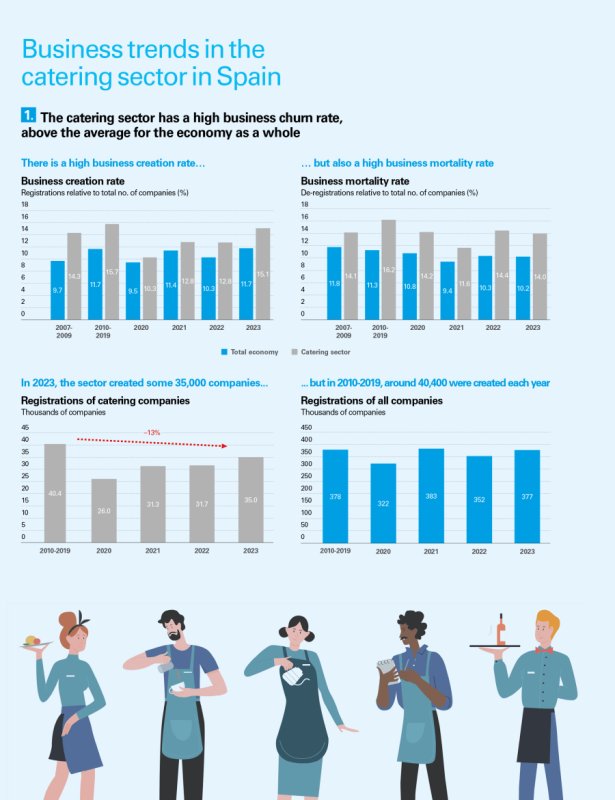
Spain’s food and beverage industry is undergoing a profound structural adjustment. While city streets remain bustling, persistent inflation is squeezing the industry’s survival space from both the supply and demand sides. On one hand, the rising prices of ingredients, gas, and electricity are pushing the operating costs of restaurants and bars to a critical point; on the other hand, the latest industry statistics show that, on average, over 30 bars across Spain are ceasing operations daily due to their inability to stay afloat. The root of this crisis is not a decline in foot traffic, but a fundamental shift in consumer patterns.
The “Downgrading” Trend: Affordable Options Gain Popularity
The core issue lies in a deep-seated change in consumer behavior. Data reveals that the increase in the average customer’s bill is far from keeping pace with the inflation rate, leading to a significant dilution of business profits. To cope with the pressure of living costs, Spanish consumers are shifting from traditional dining or high-end restaurants to more cost-effective alternatives. Fast-food outlets, pizzerias, and coffee roasteries, which offer transparent pricing and a lower entry barrier for spending, have become the new favorites. Furthermore, the “ready-to-eat hot food” sections offered by major supermarkets have successfully diverted a large segment of the restaurant market’s customer base with their convenience and price advantage. The shift from “fine dining” to “affordable necessity” has become the mainstream market trend.
A Pan-European Pressure: Spain’s Industry Woes Are Not an Isolated Case
This “winter” for the hospitality industry is not unique to Spain; the entire European market is facing a similar predicament. In Germany, for instance, over 11,000 restaurants have closed down in the past five years. A pan-European survey report indicates that as many as 42% of consumers admit to having significantly reduced the frequency of dining out. The “triple pressure” of energy prices, labor costs, and raw material expenses constitutes the severe challenge currently faced by European restaurant operators, deterring many potential entrepreneurs.
The Path Forward: Cost Control and Unique Experiences Are Key
In the face of these industry-wide growing pains, only businesses that can quickly adapt to market changes are likely to survive. Industry analysts point out that the future restaurant market will exhibit a clear polarization: at one end are businesses that offer competitively low-priced products through extreme cost control; at the other end are those that create irreplaceable, unique experiences, persuading consumers to accept their high added value. In this era of thin margins, a restaurant’s success no longer depends solely on culinary skill, but rather on meticulous management of operational costs and a keen insight into the changing psychology of consumers. The question of how to survive has become a more pressing test than the dream of opening a restaurant itself.
