Semana Santa in Spain: A Nationwide Spectacle of Faith and Tradition
Semana Santa (Holy Week) is Spain’s most important religious festival of the year, typically held the week before Easter. For example, a given year’s Holy Week might run from Sunday, April 13th to Sunday, April 20th. During this time, solemn religious processions and celebrations take place in cities and small towns alike, offering a window into Spain’s deep-rooted faith and cultural traditions.
The Structure of Processions: Brotherhoods and Key Participants
The core organizers of Semana Santa processions are the ‘cofradías’ (brotherhoods), long-standing religious associations belonging to specific parishes that plan the entire event. The visual centerpiece of the procession is the ‘paso,’ an elaborately decorated religious float. These floats carry life-sized sculptures depicting scenes from the Passion of Christ or the sorrows of the Virgin Mary. Weighing over a ton, their movement relies entirely on the ‘costaleros’ (bearers) hidden underneath. Guided by the commands of a ‘capataz’ (foreman), they advance slowly with a unified, rhythmic gait.
Another striking figure in the procession is the ‘nazareno’ (penitent). Dressed in long robes and conical hoods that conceal their faces, they walk behind the ‘pasos’. Some ‘nazarenos’ choose to walk barefoot or carry crosses as an expression of personal penance and faith. Additionally, brass and percussion bands (‘bandas’) play throughout, creating a solemn and majestic atmosphere for the procession.
The Holy Week Chronicle: From Palm Sunday to Easter
Holy Week has a specific theme and set of rituals for each day, with the overall mood transitioning from somber mourning to eventual joyous celebration.
Palm Sunday (Domingo de Ramos): Commemorates Jesus’ entry into Jerusalem. The atmosphere of the processions on this day is relatively light-hearted, often with children participating. People wave palm fronds to welcome the ‘La Borriquita’ (The Little Donkey) float, creating a joyful scene.
Holy Monday to Holy Wednesday (Lunes a Miércoles Santo): The themes shift towards contemplation, betrayal, and the path of suffering for Jesus. The pace of the processions slows, and the atmosphere becomes more solemn, often marked by candlelight and moments of silence. Holy Wednesday, in particular, features processions themed around ‘Jesús Nazareno’ (Jesus the Nazarene carrying the cross), which are a significant test of the ‘costaleros’' endurance.
Maundy Thursday and Good Friday (Jueves y Viernes Santo): Maundy Thursday commemorates the Last Supper and is one of the busiest times for major processions. Good Friday is the most solemn day of Holy Week, focusing on depictions of the Crucifixion and the Sorrowful Mother (‘Virgen de los Dolores’). In cities like Seville, Malaga, and Granada, tens of thousands of faithful and tourists gather for these events.
Holy Saturday and Easter Sunday (Sábado Santo y Domingo de Resurrección): Holy Saturday is a day of silent waiting, symbolizing Jesus’ burial. Sunday marks the climax of the celebration. To celebrate the Resurrection of Jesus, the processional music becomes joyful and uplifting, and the crowds erupt in cheers, symbolizing hope and new life.
Unique Traditions: Music, Vows, and the Spontaneous Saeta
Beyond the visual spectacle, Semana Santa offers a unique auditory and emotional experience. A tradition known as the ‘saeta’ is particularly special. This is an improvised, a cappella religious lament with a mournful flamenco style. As a ‘paso’ passes by, a devotee from a balcony or the street will often break into this powerful song. At that moment, the entire procession falls silent to listen, creating a deeply moving and powerful atmosphere.
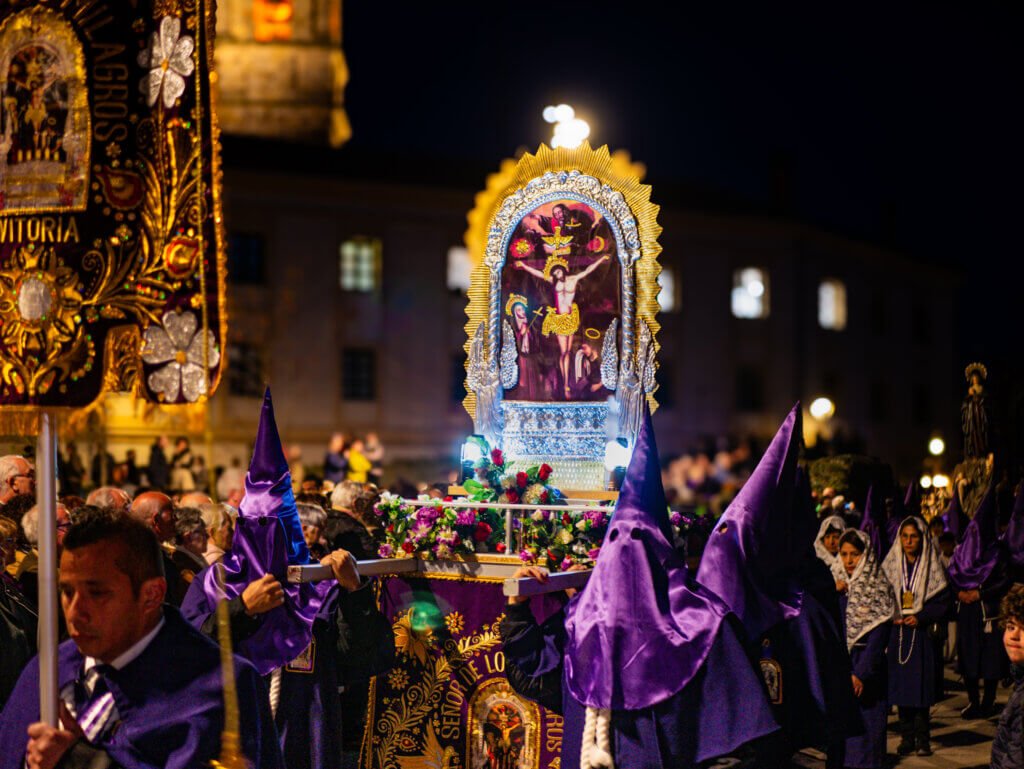
For many believers, participating in Semana Santa is an important way to fulfill a personal vow (‘promesa’). Whether by becoming a ‘costalero’, walking the entire route barefoot, or praying to an image of the Virgin Mary, these acts demonstrate their devout religious commitments. Weather is a crucial factor affecting Holy Week events. If it rains heavily, a procession may be cancelled, which is a great disappointment for the ‘cofradía’ members and devotees who have prepared all year.
In summary, Semana Santa is not just a religious ritual but also a profound community event and cultural heritage. It intrinsically links the faith, art, and family traditions of the Spanish people, forming a unique part of the national cultural landscape.
