Eight Autonomous Communities on Alert
Spain’s State Meteorological Agency (Aemet) confirmed on March 30, 2026, that weather alerts have been activated for eight autonomous communities: Aragon, the Balearic Islands, Castile and León, Catalonia, Madrid, Murcia, Valencia, and the Canary Islands. Among them, Huesca, Ibiza, Formentera, and Menorca are under an orange alert, with wind gusts expected to exceed 100 km/h. The mountainous areas of Madrid and Castellón are also under a yellow alert.
Severe Impact in Catalonia, Traffic Disrupted
Even before this widespread alert was issued, the Catalonia region had already been severely impacted by extreme weather. The strongest gusts recorded in the area surpassed 160 km/h, damaging facilities at several campsites and felling numerous trees. The fallen trees not only caused injuries but also crushed road and rail infrastructure, disrupting traffic routes in at least 18 municipalities and causing significant inconvenience for local residents’ travel.
A Mix of Complex Weather: High Temperatures, Dust, and Rain
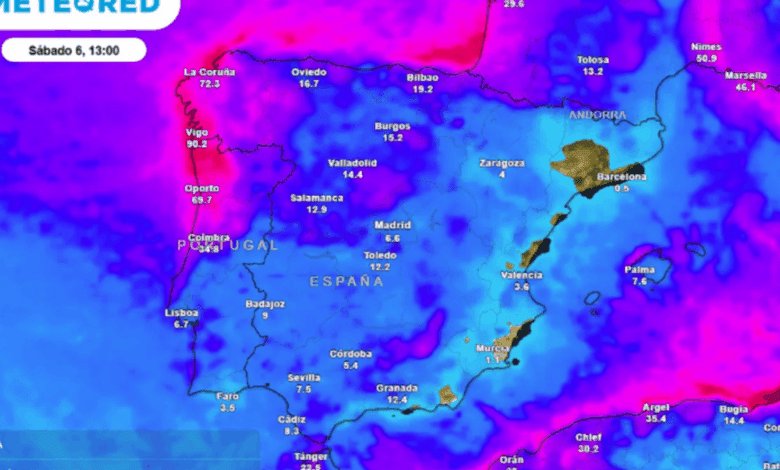
Despite the raging winds, temperatures have risen significantly across most of the Iberian Peninsula, particularly in the Pyrenees and the southern plateau. However, the complex weather system has also brought other extreme conditions. The Mediterranean coast faces the threat of high waves, with orange alerts for coastal phenomena issued for Mallorca, Menorca, and parts of the Catalan coast. Meanwhile, in the Atlantic, the Canary Islands of Lanzarote and Fuerteventura are affected by a ‘calima’ (haze from Saharan dust), leading to reduced visibility. The northern Cantabrian and Pyrenees mountain ranges are experiencing persistent light rain, with the snow line gradually rising from 800-1000 meters to 1400-1800 meters.
Challenges for Holy Week Travel, Authorities Urge Caution
Meteorological analysis indicates this weather event is primarily caused by a combination of northerly air currents, an anticyclone in the northwest, and an isolated high-altitude depression (DANA) over North Africa affecting the Balearic Islands. As this coincides with the beginning of the Holy Week holidays, a period of heavy travel, the unstable weather patterns pose an ongoing threat to public safety and transportation. The meteorological department advises the public to remain vigilant, monitor weather changes, and take necessary precautions, being aware of the risks that strong winds can pose to public infrastructure and personal safety.
