‘Downgraded’ Eggs Amid Avian Flu Measures
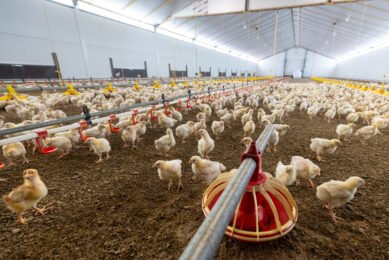
Spain’s Organization of Consumers and Users (OCU) has recently issued a public warning, highlighting that for the past four months, Spanish consumers have been overpaying for eggs of ‘downgraded’ quality. The issue originates from a measure enacted last November by Spain’s Ministry of Agriculture, Fisheries and Food to control avian flu, which mandated the confinement of all poultry typically raised outdoors. Consequently, the production conditions for so-called ‘free-range’ (huevos camperos) or ‘organic’ (huevos ecológicos) eggs have fundamentally changed. These hens have not had outdoor access as their labels promise, thus diminishing the value of the final product.
The Hidden Cost for Consumers
According to OCU’s calculations, consumers are currently paying a premium of 17% to 24% for these misleadingly labeled eggs, as the product has lost its core value of being raised outdoors. Specifically, a dozen medium-sized eggs from caged hens (code 3) costs an average of €3.03, while a dozen ‘free-range’ eggs of the same size (code 1) costs as much as €3.77. Concurrently, influenced by global factors such as the avian flu crisis in the United States, overall egg prices in Spain remain at historic highs. The cumulative price increase per dozen has already reached €1 compared to previous periods, further adding to the financial burden on consumers.
Legal Loopholes vs. The Right to Information
Although this practice feels unfair to consumers, under current EU regulations (Delegated Regulation 2023/2465 and Regulation 2018/848), producers are permitted not to change packaging or labels when farming conditions are temporarily altered for animal health reasons, such as disease prevention. However, the OCU strongly argues that this rule severely infringes on the consumer’s fundamental right to information. The organization refutes the industry’s claim of technical difficulties, stating it ‘does not hold water.’ Since the traceability codes on eggs are applied via automated printing, OCU insists that temporarily changing the code—for example, from ‘1’ (representing free-range) to ‘2’ (representing barn-raised)—is technically feasible.
OCU’s Formal Complaint and Policy Appeals
For this reason, OCU has formally filed a complaint with the Spanish Ministry of Agriculture, Fisheries and Food, urging it to amend the regulations. The organization demands that in future situations where farming standards are altered due to force majeure, producers must be required to inform consumers through clear notices on the packaging and at the point of sale. Furthermore, considering potential economic instability linked to geopolitical factors like the situation in Iran, OCU has reiterated its call for the government to reduce the VAT (IVA) on basic foods such as eggs, bread, and milk from the current 4% to 0% to ease the cost-of-living burden on citizens. As of now, the Ministry of Agriculture has not issued a definitive response to the central request for label modifications.
