Spain Closes Airspace and Military Bases
According to a March 30 report from the Spanish newspaper 20 Minutos, the government led by Prime Minister Pedro Sánchez has officially ordered the closure of its airspace, prohibiting transit for U.S. military aircraft involved in military operations against Iran (codenamed “Operation Epic Wrath”). The air navigation authority, Enaire, confirmed the ban applies only to military flights and does not affect commercial aviation.
Spanish Minister of Defence Margarita Robles emphasized that the government had made it clear to the U.S. from the outset of the military action that it would absolutely not permit the use of the two joint U.S.-Spanish military bases at Rota and Morón. She reiterated that Spain “completely opposes and disagrees with” this war, considering it “extremely illegal and unjust,” and therefore will not facilitate the related military operations under any circumstances.
Washington’s Stern Response and Threats
In response to Spain’s ban, the U.S. government reacted swiftly. An official from the Trump administration stated: “The U.S. armed forces are meeting or have already exceeded all objectives under the framework of ‘Operation Epic Wrath’ and do not need the help of Spain or any other country.”
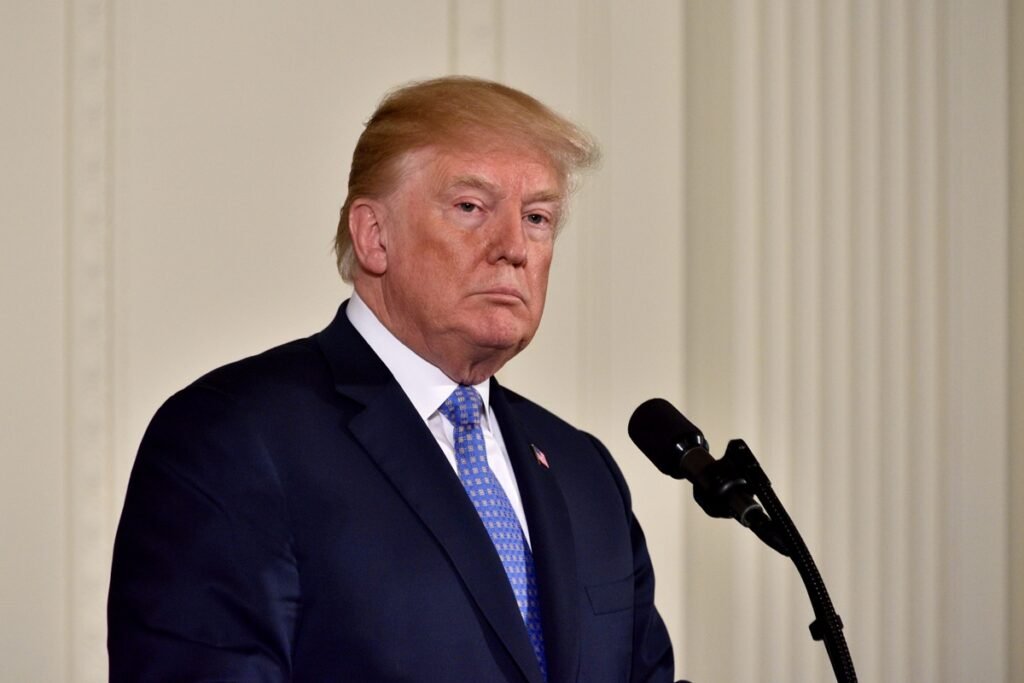
Spain’s refusal to open military bases governed by bilateral agreements has already strained relations between the two countries. U.S. President Trump had previously publicly criticized Spain as a “terrible” partner and threatened to cut off all trade, even though Spain’s trade policy falls within the unified framework of the European Union.
U.S. Secretary of State: NATO Relationship Will Be Reassessed
The impact of this dispute has extended beyond bilateral matters, touching the very foundations of the NATO alliance. In an interview with Al Jazeera, U.S. Secretary of State Marco Rubio stated that in light of the actions of countries like Spain, the United States will have to “reassess” its relationship with NATO after the war against Iran concludes.
Rubio pointed out that one reason NATO is beneficial to the U.S. is that it provides “contingency bases.” However, if allies refuse to provide support at critical moments, then the alliance “is not a good deal” for the United States. He stated clearly: “When the United States needs it, a country like Spain—a NATO member we are committed to protecting—refuses us the use of its airspace… We will have to reassess all of this.”
Political Divisions within Spain
The Spanish government’s decision has sparked sharply divided reactions domestically. Alicia García, spokesperson for the main opposition People’s Party (PP) in the Senate, criticized the government’s measure as “hasty” and its stance as “hypocritical,” arguing that it contradicts previous statements.
Meanwhile, the ruling Spanish Socialist Workers’ Party (PSOE) defended the decision. Enma López, deputy spokesperson for the Federal Executive Committee, stated that closing the airspace was a measure consistent with the government’s “anti-war” stance. She criticized the People’s Party for failing to support the government in dealing with the economic impacts of the war at a crucial time, instead resorting to relentless political attacks.
