General Trend: Cold Air Retreats, Temperatures Rise
According to Rubén del Campo, spokesperson for Spain’s State Meteorological Agency (Aemet), the weather across Spain will be predominantly stable during the upcoming Holy Week. As the cold front from last weekend dissipates, temperatures nationwide are set to rise steadily. Samuel Biener, a meteorologist from the weather service Meteored, also confirms a significant increase in daytime temperatures, bringing good news for those planning holiday trips.
Significant High Temperatures in the South, Potentially Record-Breaking
This warming trend will be particularly pronounced in the southwest of the Iberian Peninsula. Temperatures in the Guadalquivir Valley are forecast to reach or even exceed 30°C. Specifically, major cities like Sevilla, Córdoba, Huelva, and Badajoz will see highs between 25°C and 29°C midweek. Aemet further indicates that around Good Friday, some areas in the south could hit 28°C to 30°C, potentially setting new temperature records for this time of year.
Northern Regions and Islands: A Mix of Rain and Cooler Temperatures
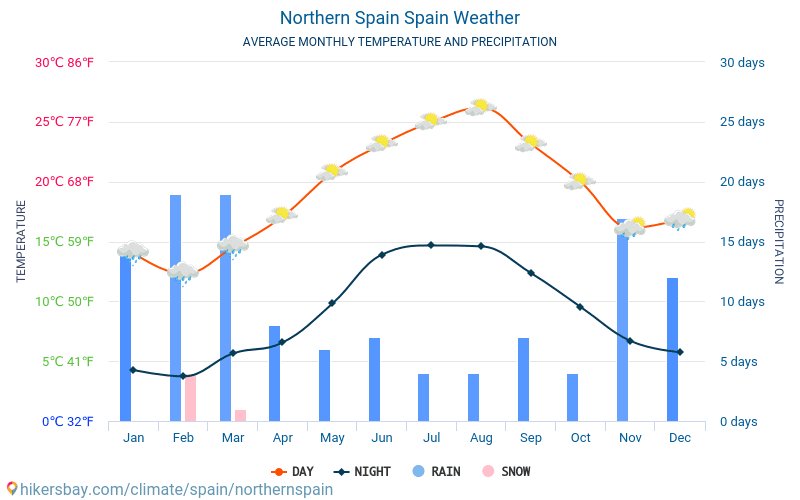
In contrast to the heat in the south, rainfall will be concentrated in northern Spain. The Cantabrian Mountains, the Pyrenees, and the upper Ebro Valley will experience more significant precipitation. Early this week, there is even a possibility of snowfall in mountain areas at altitudes of 1000 to 1600 meters. Additionally, the Balearic Islands may see showers between Tuesday and Thursday, so travelers heading to this region should be mindful of the changing weather.
Multiple Weather Alerts Issued
Besides the regional differences in temperature and precipitation, Aemet has issued several weather alerts that require public attention:
- High Coastal Waves: During Holy Week, the sea will be rough along the coast, with waves potentially exceeding six meters, posing a risk to maritime activities.
- Saharan Dust: The Canary Islands will be affected by a Saharan dust haze (calima) early this week, leading to reduced visibility and poor air quality.
- Strong Winds: Strong gusts are possible in areas such as the north of the Valencian Community and Aragon, with wind speeds reaching up to 100 km/h.
- Diurnal Temperature Range: Although daytime temperatures are rising significantly, the temperature difference between day and night remains large in many areas. Nighttime temperatures may drop to around 20 degrees Celsius, so it is advisable to carry a jacket when going out to cope with the temperature changes.
