Euríbor Ends Period of Stability, Volatility Increases
The recent outbreak of geopolitical conflict involving Iran has shattered the calm expectations in the Spanish financial market. The period of stability for the Euro Interbank Offered Rate (Euríbor), the pricing benchmark for the vast majority of variable-rate mortgages in Spain, has come to an end. Data shows that in March 2026, the monthly average of the 12-month Euríbor rose to 2.565%, which is 0.34 percentage points higher than the 2.221% from the same period a year ago, reaching its highest level since October 2024.
Before this conflict, most analysts had predicted that the index would remain stable or even fall within the year. However, in March, Euríbor’s daily trading levels frequently approached 3%. Throughout the month, there were 17 trading days with recorded increases and only 5 with decreases, showing a significant increase in volatility. Market analysis suggests that this drastic change directly reflects the uncertainty brought by geopolitical conflict and concerns about future inflation.
Rising Inflation and ECB Rate Hike Expectations
The rise of the Euríbor index is closely linked to the macroeconomic environment. Data indicates that Spain’s inflation rate rebounded to 3.3% in March, while the rate for the entire Eurozone was 2.5%, both of which are above the 2% target set by the European Central Bank (ECB). Persistent inflationary pressure increases the likelihood of the ECB adjusting its monetary policy.
The market widely predicts that if inflation cannot be effectively controlled, the ECB may resume its cycle of interest rate hikes to stabilize prices. As the trend of Euríbor is tightly linked to the ECB’s key interest rates, any rate hike would directly push Euríbor further up, thus increasing the interest burden for borrowers.
Immediate Increase in Monthly Payments for Millions of Households
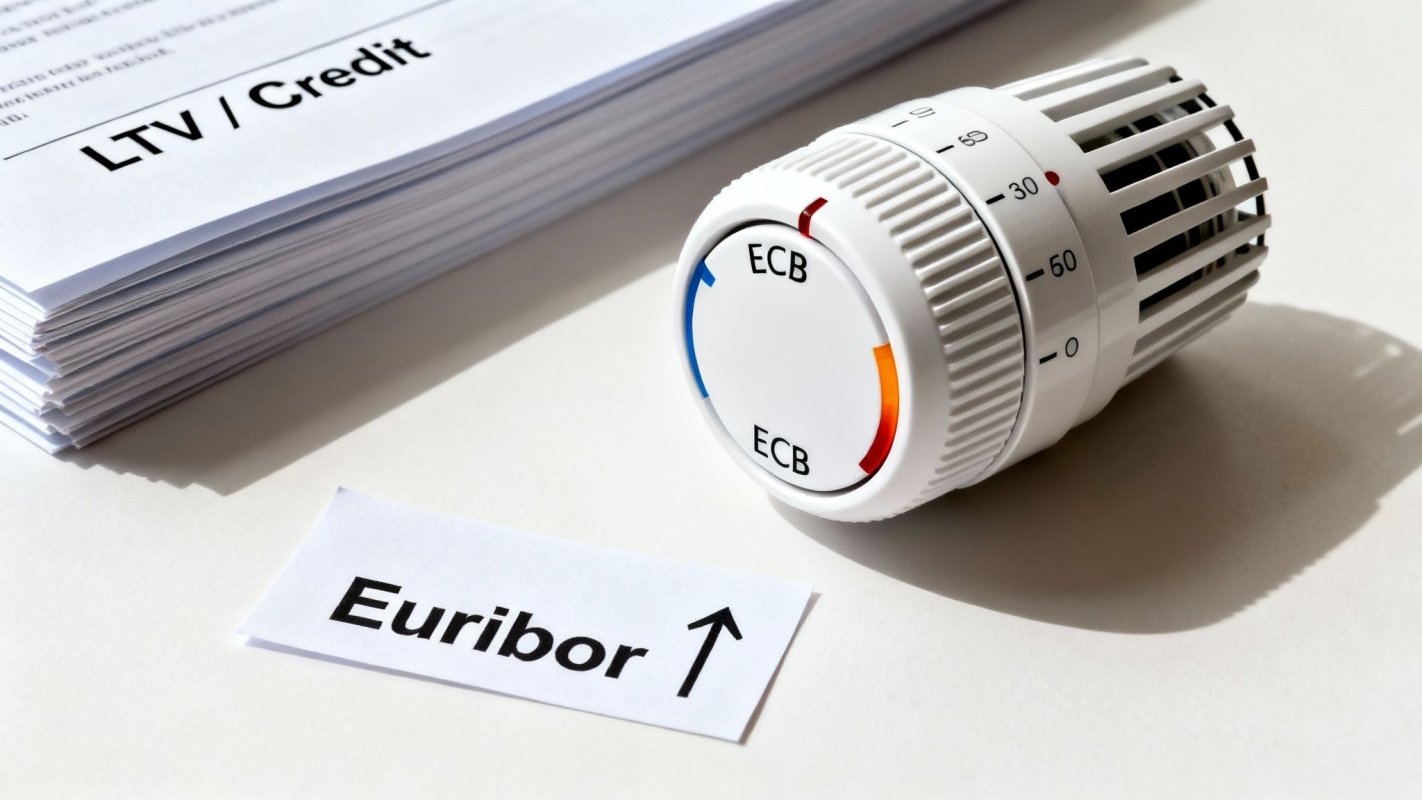
The rebound of Euríbor has a direct impact on the financial situation of many Spanish households. According to data from the Spanish Association of Financial Users (Asufin), out of approximately 5.62 million active mortgages in the country, a high of 59% (around 3.32 million) are variable-rate or mixed-rate types. These households will see their monthly payments adjusted as their interest rates are reviewed.
For a typical mortgage of €160,000 over 25 years with an interest rate of “Euríbor + 1%”, if reviewed in April based on the latest March rates, the monthly repayment amount will increase by approximately €30, meaning an additional annual expense of about €360. An analyst from the loan comparison platform iAhorro pointed out that Euríbor has entered a “phase of high uncertainty,” with volatility comparable to that of crypto assets, making future repayment pressures highly variable.
Real Estate Market Outlook Remains Unclear
Theoretically, rising financing costs will suppress housing demand, potentially leading to a cooling of the real estate market and even slowing down the pace of house price increases. Asufin has also observed that commercial banks have started to raise their quotes for new fixed-rate mortgages accordingly, increasing the barrier to entry for new homebuyers.
However, it is still too early to determine if the market has entered a downward trend. Official data shows that while home sales in January 2026 fell by 5% year-on-year, the number of mortgage contracts signed during the same period maintained a resilient 6% year-on-year growth. Due to the lack of complete real estate transaction data after the conflict erupted (i.e., from March onwards), the ultimate impact of geopolitical turmoil on Spanish housing prices requires further observation.
