According to a recent Living Conditions Survey published by Spain’s National Statistics Institute (INE), the country is facing a deepening divide in housing energy efficiency. The report indicates that while over a third of households recognize their homes are energy-inefficient and need renovation, financial constraints pose an insurmountable barrier, especially for low-income families.
Significant Disparity in Renovation Needs Between Rich and Poor Households
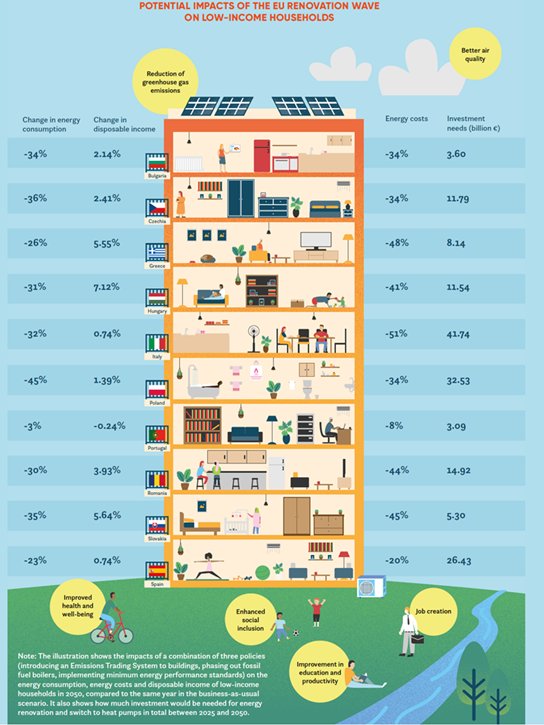
Survey data reveals a clear negative correlation between income level and the ability to renovate a home. Among the bottom 20% of households by income, a staggering two-fifths (about 40%) state their homes require energy-saving renovations but are unable to undertake them due to the cost. In contrast, only a quarter (about 25%) of high-income households face similar challenges. This disparity highlights the crucial role of economic status in determining housing quality and energy consumption.
Aging Buildings Exacerbate Plight of Low-Income Groups
Spain’s building stock is generally old, with about three-quarters of households living in properties built in the 20th century, which have insulation and energy standards far below modern constructions. The problem is particularly acute in buildings over 60 years old. In homes built before 1960, over half of low-income residents believe their home’s insulation or heating system needs updating. However, among high-income residents in homes of the same age, the proportion with this need is only 27.5%, suggesting that wealthier groups are better able to perform continuous maintenance and upgrades on older properties.
Plight of Specific Vulnerable Groups is Concerning
In addition to low-income groups, the report specifically highlights several other demographics in urgent need of energy-efficient housing renovations. The issues are most prominent for renting households and single-parent families. Data shows that 44.1% of renters and 40.3% of single-parent households believe their current homes have significant energy loss problems, such as poor insulation or drafts from doors and windows. For renters, they have neither the authority nor the incentive to invest in a property they don’t own, while single-parent families often face greater financial pressure.
High Costs are the Main Obstacle, Policy Support Needs Strengthening
When exploring the reasons for not carrying out renovations, economic factors rank first. A high 76.2% of surveyed households cited the reason as “it’s too expensive.” This figure rises to 83.8% among low-income groups. In stark contrast, non-economic reasons such as complex administrative procedures or difficulty finding suitable contractors account for a very small percentage. Experts warn that although the government has launched a series of subsidies for energy-efficient building renovations, the remaining out-of-pocket expense for poor households is still a substantial amount. If the barrier to entry for these renovations is not effectively lowered, housing quality inequality will continue to worsen energy poverty, making vulnerable groups even more fragile in the face of fluctuating energy prices.
