According to the latest price index released by the Spanish real estate portal Idealista, the price of second-hand homes in Spain continued its strong upward trend in the first quarter of 2026, reaching a new all-time high. Data shows that as of the end of March 2026, the average price for resale properties had climbed to €2,709 per square meter, indicating sustained market heat, although potential signs of a turning point are beginning to emerge.
Widespread Price Growth with Many Areas Hitting Record Highs
The report reveals a 2.7% quarter-on-quarter price increase in Q1 2026, with a remarkable year-on-year growth rate of 17.2%. This surge even surpasses the 16.2% annual growth rate recorded at the end of 2025. This price hike is widespread, with all of Spain’s 52 provincial capitals registering year-on-year increases. Notably, 15 of these capitals set new all-time price records in March.
Among provincial capitals, León leads the nation with a 22.7% annual increase, closely followed by Ciudad Real at 21.1%. At the regional level, the Region of Murcia became the area with the highest growth, posting a 23.1% year-on-year increase.
Core City Prices Remain Firm Amidst Significant Regional Disparities
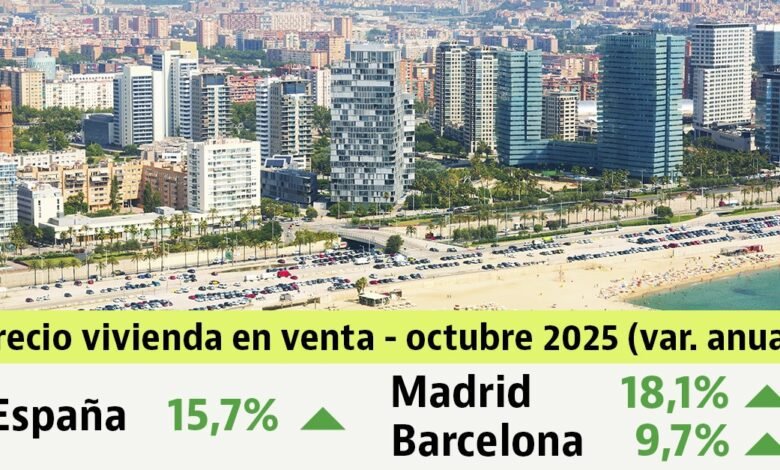
In terms of absolute prices, San Sebastián remains the most expensive city in Spain, with an average price of €6,426 per square meter. The capital, Madrid, is also approaching the €6,000 mark, reaching €5,960 per square meter. Among other major markets, Valencia saw a year-on-year increase of 14.4%, Málaga grew by 12.1%, and Madrid by 12.0%, while Barcelona’s growth was more moderate at 7.7%.
In the ranking of the most expensive autonomous communities, the Balearic Islands top the list with an average price of €5,236 per square meter, highlighting the significant price disparities between regions.
A Market Turning Point May Be Ahead as Declining Sales Volume Raises Concerns
Despite the strong price momentum, signs of a potential correction are appearing. Idealista’s spokesperson, Francisco Iñareta, pointed out that the current record-high prices, combined with tighter lending conditions from banks, are squeezing some buyer demand out of the market. This is directly reflected in the decline in transaction volumes.
He added that recent political and economic uncertainty has also dampened buyer enthusiasm. Analysts believe that if sellers do not adjust their price expectations in response to market changes, the real estate market could face more significant downward pressure in the future.
