Middle East Tensions Escalate with Large-Scale Iranian Attack
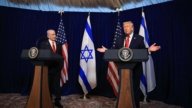
Regional security has significantly tensed up recently. According to reports, Iran launched its largest-scale attack on Israel since the current conflict began. Against this backdrop, former U.S. President Donald Trump commented, predicting that military action against Iran could conclude within weeks and claiming that Iran’s ability to develop nuclear weapons has been “substantially weakened.” He believes the current situation could create conditions for future diplomatic engagement, but the U.S. has no intention of seeking regime change in Iran.
However, Iran has denied any negotiation arrangements with the U.S. and has rejected related ceasefire proposals. Analysts point out that despite optimistic signals from the American side, the direction of the conflict in the Middle East and its spillover effects remain full of uncertainty and require further observation.
Russian Military Transport Plane Crashes in Crimea, Killing 29
On the evening of March 31, a Russian military transport plane went missing while on a mission over the Crimean peninsula. The aircraft was eventually found to have crashed on a cliff, resulting in the deaths of all 29 people on board, including 6 crew members and 23 passengers. No survivors were found at the scene. The plane lost contact with the ground at approximately 18:00 Moscow time.
The Russian Ministry of Defence revealed that a preliminary investigation shows no signs of external impact on the aircraft’s wreckage, suggesting a technical malfunction as the likely cause of the accident. Since 2014, the airspace over the Crimea region has been closed. This crash marks another significant loss for the Russian air force in recent times.
Racism in Spanish Football Sparks Public Outrage Again
The issue of racism in sports has once again become a focal point in Spanish society. On March 31, during a friendly football match between the Spanish national team and Egypt in Barcelona, some spectators repeatedly chanted the discriminatory slogan “Musulmán el que no bote” (He who doesn’t jump is a Muslim).
Although the stadium announcer made multiple calls for respect and an end to discriminatory behavior, the chanting continued, severely disrupting the atmosphere of the match. The behavior quickly drew strong condemnation from both domestic and international public opinion. The Spanish Minister of Sports, government officials, and the Royal Spanish Football Federation (RFEF) have all publicly stated that such language is “shameful” and stressed the need to strengthen anti-racism measures, not ruling out further investigations. This incident has prompted calls from all sectors of society for a deep reflection on Spain’s football culture.
Domestic Life: Easter Traffic Peak and New Policies in Motion
In Spain, the Easter holiday has brought immense travel pressure. The Directorate-General for Traffic (DGT) announced that the second phase of the holiday travel peak began this Wednesday, with road trips expected to reach around 10 million, making it one of the busiest traffic periods of the year. To ensure road safety, the authorities have deployed over 7,000 police officers and implemented various traffic control measures, such as setting up temporary reversible lanes and increasing enforcement checks.
Simultaneously, several new policies affecting daily life are being implemented. Starting in April, the Spanish government will lower the regulated tariff (TUR) for natural gas by an average of 16.6%, benefiting households and small businesses with consumption not exceeding 50,000 kWh. On another front, the Valencia city government has passed what is described as the country’s strictest new regulations for tourist apartments (short-term rentals), aiming to curb their uncontrolled expansion and prioritize the housing needs of local residents. The new rules impose strict limits on the number, location, and access of short-term rentals.
