Spain’s political landscape is in turmoil as the main opposition, the People’s Party (Partido Popular, PP), has launched a new offensive against the government led by Prime Minister Pedro Sánchez. The PP accuses the administration’s fiscal policies of severely eroding the public’s ability to spend and save.
Tax Revenue Surges by €100 Billion
During an event in Zaragoza, Alberto Nadal, the PP’s head of Economic and Sustainable Development, declared that the upcoming 2026 Holy Week (Semana Santa) is set to be ‘the most expensive in history.’ He attributed this to ‘inflation devouring wages while taxes continuously rise.’
Nadal provided specific data to support his argument. He pointed out that since the Sánchez government took office, total revenue from the two main taxes, Personal Income Tax (IRPF) and Value-Added Tax (VAT), has increased by approximately €100 billion. Of this, around €65 billion comes from IRPF, with the remaining €35 billion from VAT, which is closely tied to consumption. The People’s Party argues that this significant increase directly burdens ordinary Spanish households, especially the middle class.
Middle Class and Families with Children Hit Hardest
The People’s Party emphasizes that the increased tax burden does not affect all social groups equally. Families with children, who spend a higher proportion of their income on areas with the fastest price hikes like energy and food, are feeling the impact most acutely. According to the party’s analysis, Spain’s overall tax-to-GDP ratio has climbed to 37.9% since 2018.
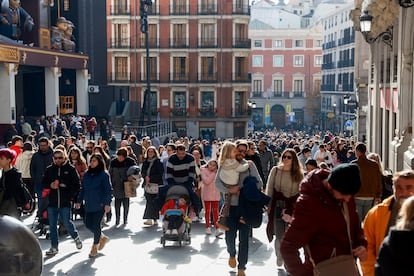
The report argues that the middle class is the primary group shouldering this wave of tax pressure. Their disposable income is being eroded, directly impacting their purchasing power and future savings plans, which poses a potential threat to overall economic vitality.
Energy Policy and Political Demands
In addition to fiscal issues, the People’s Party also criticized the government’s energy strategy. The party specifically pointed to the government’s persistence in advancing its plan to shut down nuclear power plants, a decision seen as undermining the country’s energy independence and its ability to buffer against future volatile energy prices.
Confronted with these issues, the People’s Party has ultimately laid the blame on the government itself. The party is publicly calling for snap general elections, asserting that beyond fundamental policy adjustments, a change in the ruling administration is needed to rebuild market confidence, restore Spain’s economic competitiveness, and effectively stimulate job growth.
