A City’s Hallmark: A Grand Legacy of Arcades
Located in the autonomous community of Asturias in northern Spain, the city of Avilés is a historic destination cherished by architecture enthusiasts. Its most striking feature is the network of arcades that stretches throughout the city. In fact, it has the second-highest number of arcades in Spain, surpassed only by Santiago de Compostela. These columns and arches create a unique urban landscape, offering natural shelter for residents and visitors alike.
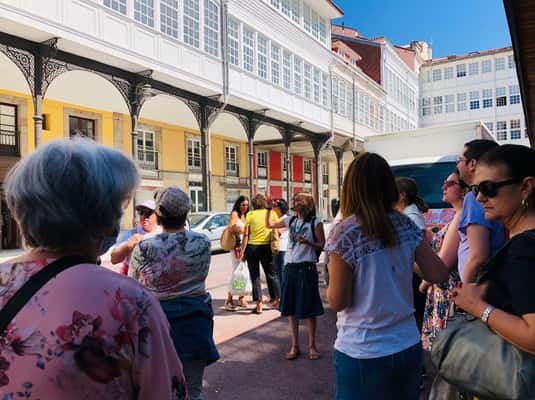
Among these, Galiana Street, built in the 17th century, is an outstanding example of this arcaded architecture. The street features an uninterrupted stretch of porticoes over 250 meters long. Its pavement still bears the marks of history: one side is a rugged cobblestone path, once used for livestock heading to the market, while the other side consists of smooth flagstones for pedestrians to stroll comfortably. This “dual-track” design ingeniously reflects the social scene of the past, where pastoralism and commerce coexisted.
Historical Footprints: Ancient Quarters Spanning Centuries
The old town of Avilés has been declared a National Historic-Artistic Site in its entirety. Starting from Plaza de España (affectionately known by locals as “El Parche”), a network of cobblestone streets connects the city’s historical veins. Rivero Street, for instance, was an important part of the 15th-century Camino de Santiago and still retains a dense historical atmosphere today.
Another charming area is the fishermen’s quarter of Sabugo. Characterized by its narrow alleys and an old 13th-century church, it silently narrates the story of Avilés’ inseparable bond with the sea as a port city, showcasing the daily life of its citizens over hundreds of years.
A Visual Symphony of Classic and Modern
Avilés is not a city dwelling solely in the past. Across from the old aristocratic gardens of Ferrera Park, an avant-garde complex of white buildings spans the estuary, creating a stark visual contrast with the old town’s scenery. This is the Centro Niemeyer, designed by the legendary Brazilian architect Óscar Niemeyer, and it is his only work in Spain. Its bold geometric shapes and pure colors inject a powerful modern artistic pulse into this ancient city.
From the explorer Pedro Menéndez de Avilés, who ventured from its arcaded streets to found the city of St. Augustine in the New World, to the trendsetting Niemeyer Centre of today, Avilés demonstrates its inclusive, ever-evolving vitality across a span of more than five hundred years.
