In recent years, the number of people applying for and obtaining citizenship in EU member states has shown a significant upward trend. Data indicates that the number of passports granted by the EU is projected to increase from 762,000 in 2014 to 1.2 million in 2024, a remarkable 54% rise over the decade. Against this backdrop, the diverse naturalization laws of each member state present a landscape of both opportunities and challenges for applicants from various backgrounds.
Overview of EU Citizenship Grants
Ranking by Number of Citizenships Granted
In terms of absolute numbers, Germany leads among EU countries, expected to grant nearly 300,000 citizenships in 2024, accounting for about a quarter of the EU total. Spain follows closely, projected to grant around 250,000, while Italy ranks third with 217,000. These three nations are the primary forces in integrating new citizens into the EU.
Ranking by Naturalization Rate
The naturalization rate (the number of people granted citizenship per 100 foreign residents) reveals a different picture. Sweden has the highest rate at 7.5 per 100 residents. It is followed by Italy (4.1 per 100), with Spain and the Netherlands tied at 3.9 per 100. In contrast, Lithuania, Bulgaria, and Estonia have some of the lowest naturalization rates in the EU. This metric reflects the efficiency and policy openness of each country in converting foreign residents into citizens.
Analysis of Main Countries of Origin for New Citizens
According to 2024 data, the largest group of new EU citizens comes from Syria, with over 110,000 individuals. Moroccans are the second-largest group, with approximately 97,000 successfully naturalized. Other major countries of origin include Albania (48,000), Turkey (over 40,000), and Romania (around 40,000). Additionally, applicants from Venezuela, Ukraine, India, Russia, and Brazil also form significant groups of new citizens, reflecting the impact of political and economic dynamics in different global regions on migration flows.
Comparing Residency Requirements for Naturalization: A Look at ‘Fast Track’ Policies
The EU does not have a standardized residency period for naturalization; requirements vary significantly among member states, with the average being around five years. Some countries have established ‘fast tracks’ for citizens of specific nations due to particular historical and cultural ties.
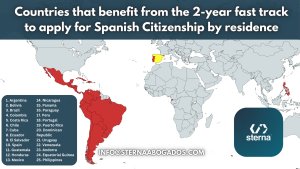
- Spain: The standard residency requirement for naturalization is 10 years. However, for citizens of Ibero-American countries (including Brazil, Argentina, Mexico, Costa Rica, Panama, etc.), Andorra, the Philippines, Equatorial Guinea, and Portugal, this waiting period is reduced to just 2 years. This makes it an expedited path for applicants from these nations to obtain an EU passport.
- Sweden: Similarly offers a shortcut for citizens of other Nordic countries, requiring only 2 years of continuous residence to apply for citizenship, whereas other nationalities typically need to wait 5 years.
Other Member States: Naturalization Thresholds and Policy Updates
Beyond residency periods, each country has multiple criteria, including language, cultural integration, and financial stability, with policies subject to change.
- Germany: Naturalization standards have become stricter in recent years. Currently, applicants must have resided in Germany for 5 years, achieve a B1 level in German, pass the naturalization test, and demonstrate stable financial means. A fast-track naturalization program for highly skilled professionals was scheduled to be discontinued in October 2025.
- Italy: The naturalization process is notably lengthy. Non-EU citizens typically need to reside legally for 10 years before applying (4 years for EU citizens), and the processing time after submission can take anywhere from 24 to 36 months.
- Poland: Offers a relatively straightforward path. Applicants with a stable income can apply for citizenship after 3 years of continuous residence.
- United Kingdom: Although no longer in the EU, its immigration framework is a useful reference. Applicants need to reside for at least 5 years, and there are considerations to extend this period to 10 years. Passing the “Life in the UK Test” and proving English language proficiency are also mandatory requirements.
- Malta: Was once famous for its citizenship by investment program (minimum investment of €600,000, with a processing time as fast as 14 months), but this program has now been suspended. The standard naturalization route still requires a residency period of about 5 years.
