The Incident: An Unexpected Charge on the Bill
During the 2026 Holy Week (Semana Santa) holiday, three customers at a bar in the town of Torrent, within the Valencian Community, discovered an unexpected item on their bill. The charge, labeled as “Weekend and holiday,” amounted to €6, effectively imposing a mandatory €2 surcharge on each customer. The consumers stated that the establishment never informed them of this fee, either verbally or in writing, before or during their meal. There was no mention of it on the menu or price list.
Bill Breakdown: How a €72.90 Bill Became €78.90
According to the bill posted on the social media platform X by the well-known hospitality influencer ‘Soy Camarero,’ the three customers’ total should have been €72.90. Their order included: an almuerzo (a traditional mid-morning meal) for three valued at €30, a portion of ranch-style potatoes for €13.90, an octopus dish for €26, and two bottles of water. However, with the addition of the €6 surcharge, their final payment was raised to €78.90. This sudden fee became the central point of the controversy.
Going Viral: Social Media Ignites Public Debate
After being exposed on social media, the incident quickly gained public attention, with the related post surpassing 144,000 views in a short time. Online comments were overwhelmingly critical of the bar’s actions. Many users argued that if a business is unwilling to bear extra costs during holidays, it should simply choose to close rather than pass the burden onto consumers through such ‘hidden fees,’ calling it a ‘blatant rip-off.’ The event has also made many people more wary of similar non-transparent charging practices in the hospitality industry.
Legal and Industry Perspectives: The Legality of the Surcharge
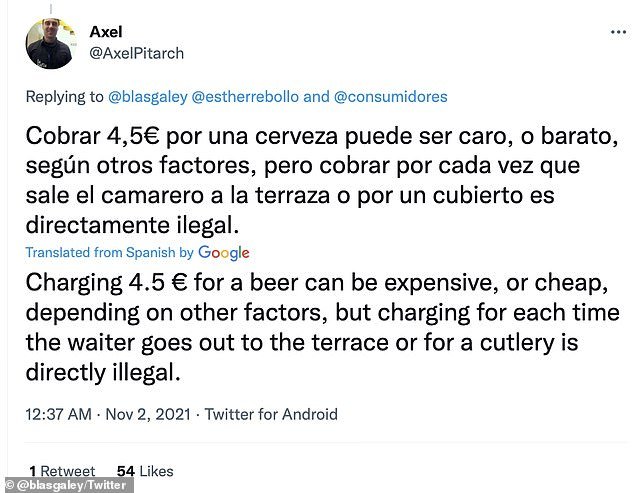
From a legal standpoint, Spanish consumer protection laws stipulate that all service fees must be clearly and explicitly displayed on the price list. If a business fails to disclose a charge in advance, the practice is considered illegal. Legal experts point out that consumers have the right to refuse payment for any charge they were not informed of beforehand. While some restaurants may increase menu prices during the high tourist season to cover rising operational costs, this is fundamentally different from directly adding an undeclared ‘per-person surcharge’ at the end of the bill. This practice not only challenges legal boundaries but also severely damages the credibility of the entire hospitality industry in the eyes of consumers.
