Introduction
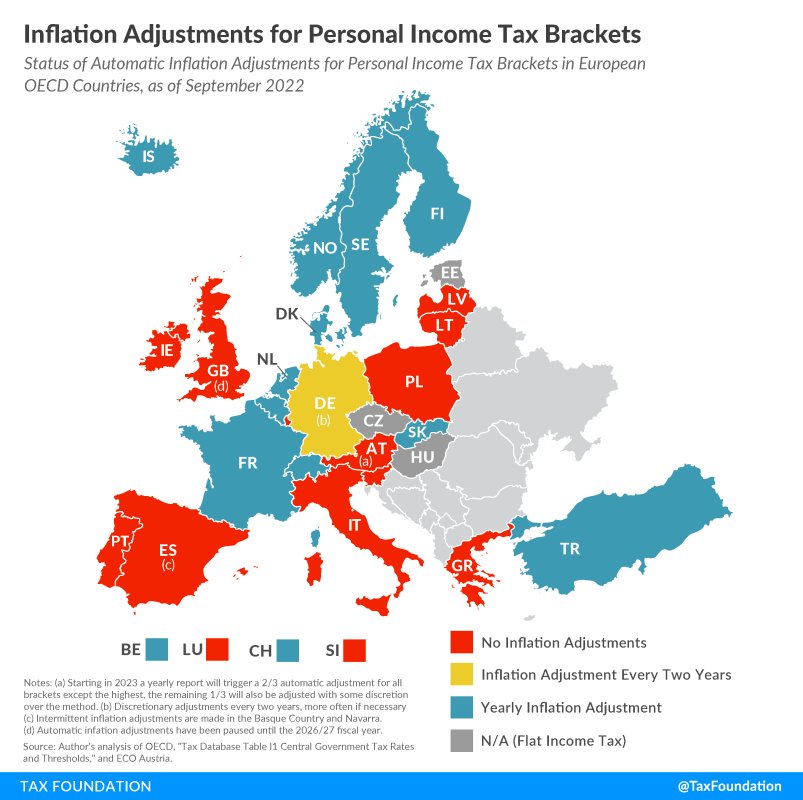
In 2026, Spanish taxpayers are facing a ‘stealth tax hike’ driven by inflation. The central government’s decision not to adjust Personal Income Tax (IRPF) brackets in line with rising prices is increasing the real tax burden on citizens. A report released on April 7, 2026, by the General Council of Economists of Spain (CGE-REAF) details this phenomenon, pointing out that wage gains are being silently eroded.
1. “Bracket Creep” Exacerbates the Public’s Burden
The phenomenon known as ‘bracket creep’ (progresividad en frío in Spanish) occurs when, amidst inflation, nominal wage increases push taxpayers into higher tax brackets because tax thresholds and brackets are not adjusted. This results in a decrease in real disposable income. The Spanish government’s refusal to ‘index’ (deflactar) the tax brackets to inflation has made this problem particularly acute in 2026. Economists point out that this effectively increases tax revenue without explicit legislation, hurting the purchasing power of low and middle-income groups.
2. Analysis of the Impact on Different Income Brackets
According to CGE-REAF’s calculations, the impact varies for taxpayers at different income levels. Specifically:
- A taxpayer earning €25,000 annually is expected to pay an extra €256 in taxes in 2026.
- For those earning €30,000 a year, the additional tax burden is approximately €342.
- When annual income reaches €45,000, the extra tax payment increases to €525.
- For high earners with an annual income of €400,000, the additional burden from this stealth tax is as high as €2,147.
3. Regional Disparities and the Central Government’s Position
While the national portion of the tax managed by Spain’s central government remains unchanged, some autonomous communities have taken steps to alleviate the pressure within their regional tax jurisdictions. Regions such as Madrid, La Rioja, the Basque Country, and Navarre have proactively adjusted their half of the IRPF brackets. However, because the other half, controlled by the central government, has not been adjusted, taxpayers in these regions still cannot completely avoid the effects of the ‘stealth tax’. Meanwhile, residents of other regions that have not made adjustments face the full impact.
4. Record Tax Revenue and Future Monitoring
Objectively, this policy has brought significant fiscal gains for the government. Data shows that the Spanish Tax Agency’s revenue reached €142.4 billion in 2025, a record high and a 10.1% increase year-on-year. This growth is largely due to the failure to update the ‘personal and family minimum tax exemption’ and the boost in Value-Added Tax (VAT/IVA) revenue driven by inflation. Concurrently, with average wages projected to rise by 2.87% in 2026, the bracket creep effect will further bolster state coffers. Reports also indicate that the tax authority plans to introduce Artificial Intelligence (AI) to enhance the monitoring and auditing of citizens’ financial accounts.
