Spanish Cabinet Approves Draft Amendment to Guarantee Public Access to Abortion
On April 7, 2026, the Spanish Council of Ministers gave the green light to a landmark draft constitutional reform aimed at formally incorporating the right to voluntary termination of pregnancy (abortion) into the Spanish Constitution. This initiative, jointly promoted by the Ministry of Equality, the Presidency, and the Ministry of Health, is crucial for mandating that the public healthcare system provide abortion services, addressing the current situation where some public hospitals in certain regions refuse to offer this legal medical procedure.
The Minister of Equality, Ana Redondo, pointed out at a press conference after the meeting that although current Spanish law and a 2023 ruling by the Constitutional Court already fully guarantee a woman’s “freedom to decide,” the real obstacle lies in the actual provision of public services. The constitutional amendment aims to resolve this issue at its core, ensuring that the right to abortion is not just a legal text but becomes an accessible public service for everyone.
Proposed Clause: Clarifying the State’s Obligation to Guarantee
The core of this amendment is to add a fourth section to Article 43 of the Spanish Constitution (which concerns the right to health protection). The proposed Spanish text is:
“Los poderes públicos garantizarán el ejercicio del derecho de las mujeres a la interrupción voluntaria del embarazo en condiciones de igualdad real y efectiva con cuantas prestaciones y servicios sean necesarios para dicho ejercicio”
This clause translates to: “Public authorities shall guarantee women’s right to voluntarily terminate a pregnancy under conditions of real and effective equality, providing all benefits and services necessary for its exercise.”
The wording of this clause is intended to emphasize the state’s positive obligation, meaning the government must not only recognize the right but also provide the necessary conditions and resources to ensure its fulfillment.
The Path to Amendment: Choosing the “Fast-Track” Procedure for Efficiency
Spain’s process for constitutional amendment is known for being complex and rigorous. To increase the chances of success and avoid a lengthy political process, the current government has chosen a relatively straightforward path: amending the Constitution under Article 167. The specific requirements for this path are as follows:
- Parliamentary Vote: The draft must be approved by a three-fifths (⅗) majority in both the Congress of Deputies and the Senate.
- Avoiding a Referendum: Because Article 43 is located in the chapter on “Governing Principles of Social and Economic Policy” and not in the core chapter on “Fundamental Rights and Public Freedoms,” this amendment does not require dissolving Parliament, calling a new general election, and holding a national referendum.
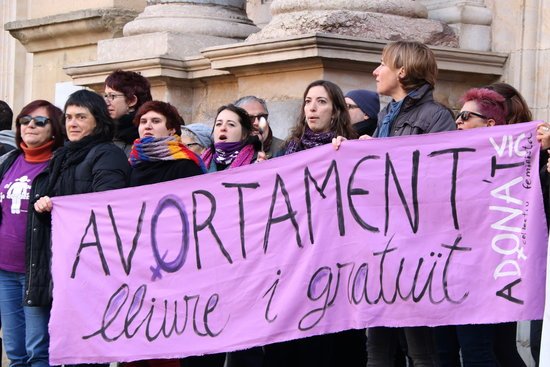
This strategy aims to guarantee the legal effect while minimizing the political and time costs of the amendment.
Legislative Motivation: Accelerated Push Amid Domestic and International Political Pressure
The Spanish government’s push to accelerate this constitutional amendment is closely linked to international trends and the domestic political climate. Internationally, France set a precedent in March 2024 by becoming the first country to enshrine abortion rights in its constitution, providing a key reference for Spain. Although countries like Slovenia have similar provisions in their constitutions, they are not as explicit as France’s.
Domestically, a political controversy in Madrid in late 2025 acted as a direct catalyst. At that time, a campaign promoted by the far-right party Vox regarding so-called “post-abortion syndrome” sparked a significant public backlash. To counter this wave, seen as a “conservative regression,” the government led by Prime Minister Pedro Sánchez decided to speed up the constitutional amendment process to legally solidify women’s rights.
The advancement of this draft has followed a clear timeline: the government first approved the initiative on October 14, 2025, and consulted the Council of State (Consejo de Estado), and after receiving its formal report on March 9, 2026, it finalized and passed the definitive draft on April 7.
