A Historic Breakthrough: Spain’s First Successful Breeding
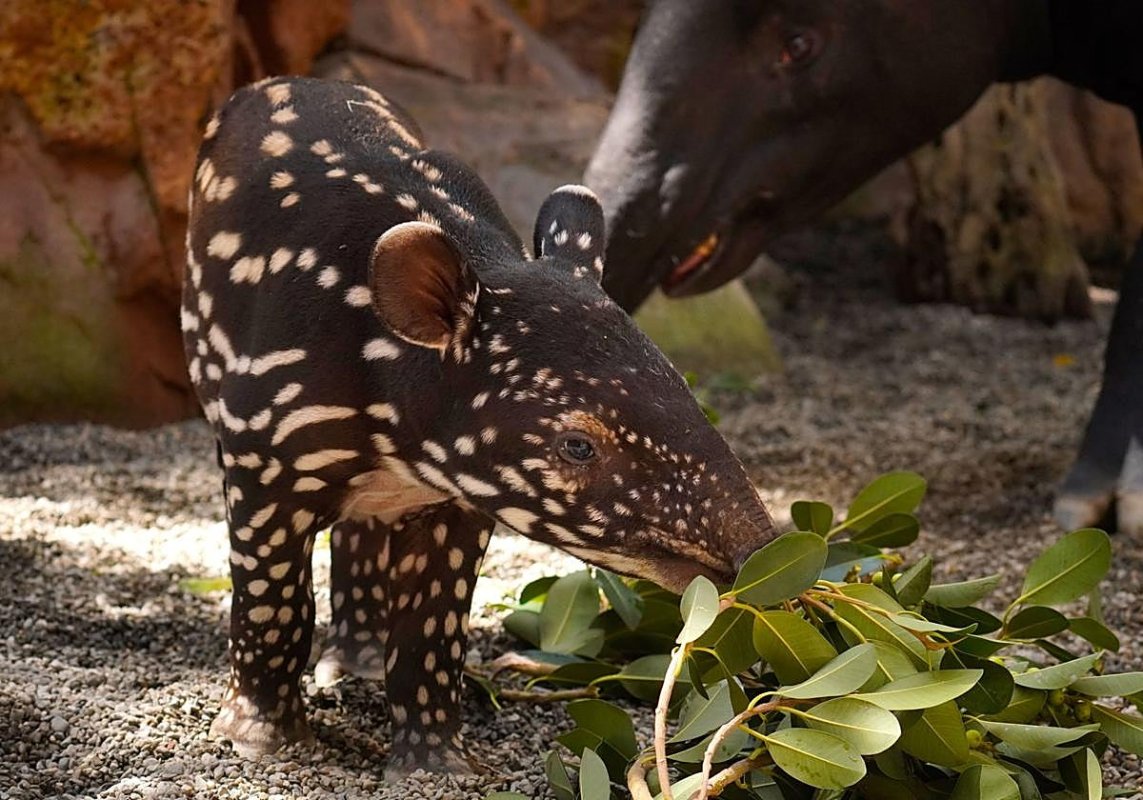
Recently, great news emerged from the province of Malaga in Andalusia, as Bioparc Fuengirola successfully bred the first Malayan tapir (Tapirus indicus) calf on Spanish soil. The healthy newborn weighs approximately 10 kilograms. This achievement not only reflects the zoo’s two decades of dedication to species conservation but also signifies a crucial victory for the European Endangered Species Programme (EEP) in Spain.
An ‘International Match’ and Meticulous Care
The birth of this new calf is the result of international cooperation. Its mother, Rawa, is a star resident of the park, while its father, Mekong, was brought from a Swedish zoo in 2023 to participate in the breeding program as part of the EEP. After a year of cohabitation and acclimatization, the pair demonstrated great compatibility. Throughout Rawa’s 13-month gestation period, the zoo’s expert team provided meticulous care, including weekly ultrasounds and 24-hour surveillance, ensuring a safe delivery for both mother and calf.
Ecological Value and Survival Plight of a ‘Living Fossil’
The Malayan tapir is an ancient species whose evolutionary history can be traced back tens of millions of years, earning it the title of a ‘living fossil.’ Despite having a flexible proboscis similar to an elephant’s trunk, they are biologically closer relatives to horses and rhinoceroses. Their iconic black-and-white coat serves as natural camouflage amidst the dappled light of Southeast Asian rainforests. As important herbivores, they act as ‘gardeners of the forest,’ playing a crucial role in maintaining the health of the rainforest ecosystem by dispersing seeds through their diet.
Captive Breeding: A Key Step in Protecting Natural Heritage
According to the IUCN Red List of Threatened Species, the Malayan tapir is facing severe survival threats. Its wild population has declined to fewer than 2,500 individuals, primarily due to habitat loss and fragmentation. In a world where over 48,600 species are at risk of extinction (with mammals accounting for 26%), every successful captive breeding is of utmost importance. This success story in Malaga provides invaluable scientific data and practical experience for building a healthy and sustainable managed population of Malayan tapirs. It also proves that through international cooperation and precise scientific intervention, humans can make a significant contribution to protecting the planet’s fragile natural heritage.
