Spain’s 2026 Immigration Regularization Initiative: A Complete Guide to Requirements and Procedures
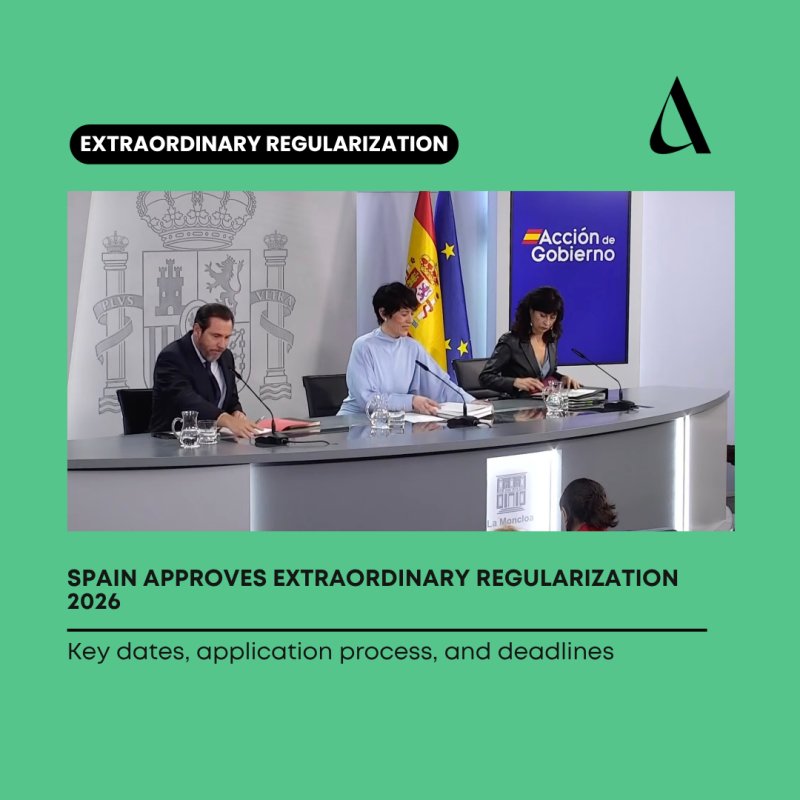
On April 15, 2026, the Spanish government published a decree in the Official State Gazette (BOE), officially launching a large-scale immigration regularization program. This initiative aims to provide a pathway for immigrants who have been living in Spain long-term without legal status to obtain residency and work permits. Official estimates suggest that this measure could benefit between 500,000 and 1 million applicants.
I. Key Application Period and Methods
This regularization process has a strict deadline and will not be extended. Applicants must pay close attention to the following key dates:
- Online Applications Open: From April 16, 2026, primarily through the official Mercurio electronic platform. This requires the applicant or their representative to have a digital certificate (Certificado Digital).
- In-Person Applications Open: From April 20, 2026, applicants can submit documents in person at designated offices after booking an appointment on the official website (inclusion.gob.es).
- Application Deadline: June 30, 2026. Officials have explicitly stated that this application window will not be extended.
Given the expected high volume of applications, it is advisable to prepare materials early to avoid potential system overloads or difficulty in securing appointments during the final rush.
II. Applicant Eligibility and Basic Conditions
According to the official decree, applicants must meet all of the following basic conditions simultaneously:
- Date of Entry: Must have entered Spain before January 1, 2026.
- Length of Residence: Must be able to prove at least 5 months of continuous residence in Spain at the time of application.
- Immigration Status: Must be in an irregular immigration status (without a valid residency permit) at the time of application.
- No Other Pending Processes: Must not have any other type of residency application or appeal pending with the immigration authorities.
- No Criminal Record: Applicants must provide a criminal record certificate from Spain and any other country where they have resided for the past five years.
Additionally, some applicants who have never applied for asylum may need to meet an extra “social integration” (arraigo) condition, such as having a work contract or a self-employment plan, having minor children in Spain to support, or being identified as a vulnerable individual by social services.
III. Essential Document Checklist
The success of the application largely depends on the completeness and persuasiveness of the documents. The following are the core documents required:
- Proof of Residence: This is crucial for demonstrating that the applicant meets the residency requirement. A wide range of proof is accepted, including but not limited to: proof of address registration (empadronamiento), bank statements, medical records, public transport receipts, various personalized purchase receipts, study certificates, etc. It is recommended to provide a combination of documents from different sources and covering various time points to build a solid chain of evidence.
- Criminal Record Certificate: This document has strict requirements and must be notarized, officially translated, and have an Apostille.
- Identity Document: Provide a complete copy of the applicant’s passport (including all pages, even blank ones).
IV. Approval Mechanism and Applicant Rights
To handle the massive number of applications, the Spanish government has established an independent review mechanism, processed in collaboration between the Social Security system and the specialized UTEX agency, separate from the regular immigration office channels.
- Processing Time: Officials estimate the processing time to be between 15 days and 3 months.
- Immediate Right to Work: The most notable feature of this policy is that once an application is submitted and formally accepted for processing (admitido a trámite) by the official system, the applicant immediately gains the right to work legally in Spain, without having to wait for the final approval.
- Application Outcome: If approved, the applicant will receive an initial one-year residency and work permit. According to some official sources, even if the application is ultimately rejected, it will not automatically trigger deportation proceedings.
