Global Supply Concerns Ease, Oil Prices Tumble
The sharp drop in international oil prices on Friday was directly catalyzed by a de-escalation of geopolitical risks related to Iran. The Strait of Hormuz, which carries about 20% of the world’s oil trade, was previously disrupted or restricted due to a U.S. naval blockade and regional conflicts.
With the reopening of this strategic channel, market panic over a potential disruption to global oil supplies has rapidly dissipated. This significantly improved supply-side expectations, leading to a sharp price correction.
European Markets Respond Positively, Aviation Sector Benefits
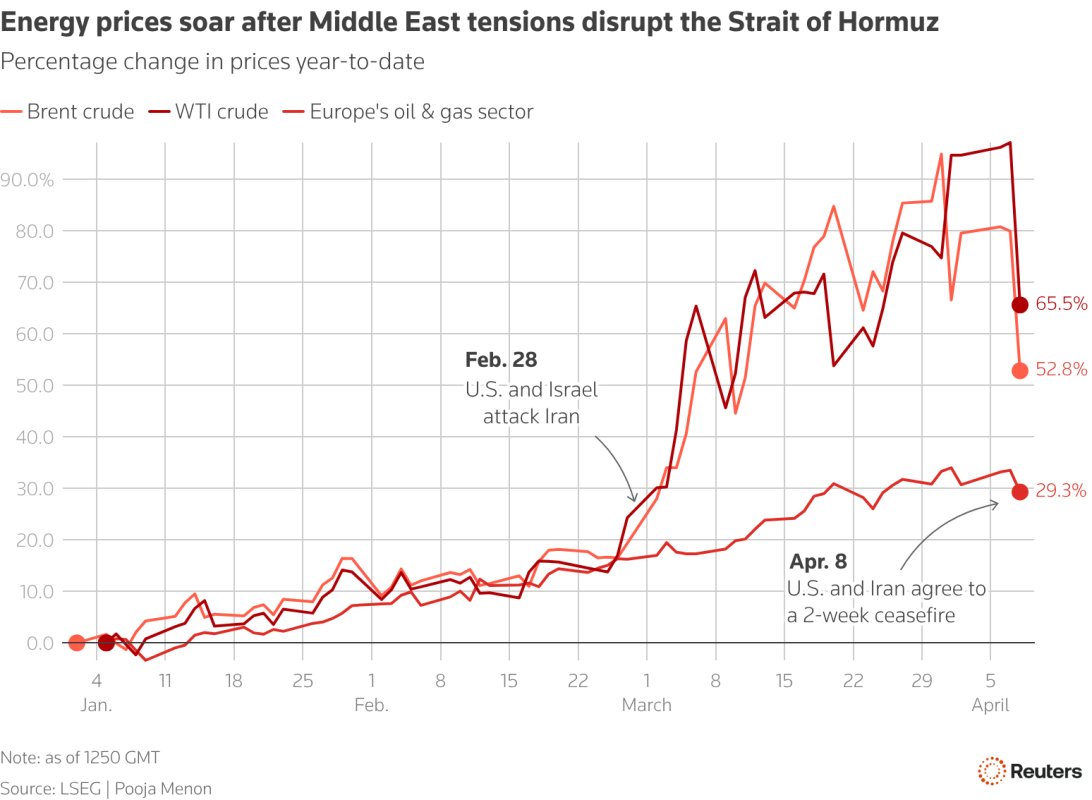
The positive news from the oil market quickly spread to financial markets, with major European stock indices broadly rising on Friday. The pan-European Stoxx 600 index posted significant gains, providing relief to several sectors previously under pressure from high oil prices.
Among the leaders were the aviation and energy sectors, which are highly sensitive to fuel costs. Falling oil prices mean lower operating costs for airlines, significantly boosting investor confidence. Previously, some European airlines had issued warnings about aviation fuel shortages, suggesting a risk of supply disruptions by early May. This price drop is expected to ease pressure during the summer travel season.
Spanish Fuel Prices Expected to Fall
For the Spanish domestic market, the decline in international oil prices is expected to be quickly passed on to consumer prices. Analysts believe that retail prices for gasoline and diesel in Spain are likely to see a reduction in the short term.
This will allow the Spanish government’s fiscal subsidy measures, such as the value-added tax (IVA) reduction, previously implemented to combat high energy costs, to more effectively benefit businesses and the general public, alleviating inflationary pressures.
Market Warning: Geopolitical Risks Not Yet Eliminated
Although market sentiment has turned optimistic, analysts are widely advising investors to remain cautious. Experts point out that the current ceasefire or related agreements are still in their early stages, and the fundamental geopolitical risks in the Middle East have not been fully eliminated.
Therefore, future trends in international oil prices could still experience sharp fluctuations depending on how the situation evolves, leaving the market outlook uncertain.
