The conflict in the Middle East initially worried Spanish households with variable-rate mortgages (whose monthly payments are tied to the Euribor), fearing the ECB might restart rate hikes and increase their financial burden. However, the latest news indicates the ECB is inclined to remain cautious and hold off on raising rates for now.
A Cautious Stance: Navigating Geopolitical Uncertainty
With about two weeks until the April 30 monetary policy meeting, internal signals from the European Central Bank (ECB) suggest a consensus is forming within the Governing Council to keep the Eurozone’s key interest rates unchanged. Although the Middle East situation introduces new uncertainty to the inflation outlook, with the ECB even raising its 2026 inflation forecast, policymakers have decided to continue monitoring developments.
ECB President Christine Lagarde confirmed this stance in a recent public interview. She stated that while the bank needs to “remain highly flexible,” it is currently “not inclined to raise rates,” emphasizing the need for more economic data and confirmation that the Middle East conflict will not be prolonged before making a decision.
A Historical Lesson: The Stark Warning of “Trichet’s Mistake”
The ECB’s current cautious approach is primarily driven by the need to protect its policy credibility and avoid repeating past errors. A key historical lesson for the current leadership is the 2011 rate hike event, famously known as “Trichet’s Mistake.”
In April 2011, with the European sovereign debt crisis brewing, then-President Jean-Claude Trichet led the ECB to raise interest rates from 1% to 1.5% to combat inflation driven by rising energy prices. However, this move proved to exacerbate economic difficulties, forcing the ECB, under his successor Mario Draghi, to reverse course and cut rates in November of the same year. This decision to hike rates at the wrong time, based on a supply-side shock, severely damaged the central bank’s credibility.
The current situation shares many similarities with 2011. Inflationary pressure stems mainly from external shocks rather than overheating domestic demand, making policymakers particularly wary of any tightening measures that could stifle economic recovery.
The Policy Trade-off: Avoiding Harm to the Economy and Credibility
The risks of a premature rate hike are clear. It could stifle already fragile economic growth and business activity. If inflation proves less persistent than expected, or if the geopolitical conflict de-escalates quickly, a hasty rate hike would be seen as a major misstep by markets and the public, forcing the bank to reverse its policy and further damage its credibility.
Furthermore, policymakers recognize that the limited economic data available before the late April meeting is insufficient to fully assess the far-reaching impact of the conflict. Additionally, this meeting does not include the release of updated macroeconomic projections (which are typically published in March, June, September, and December), making a rate adjustment at this juncture seem ill-timed and overly risky.
Market Self-Correction and Expert Opinions
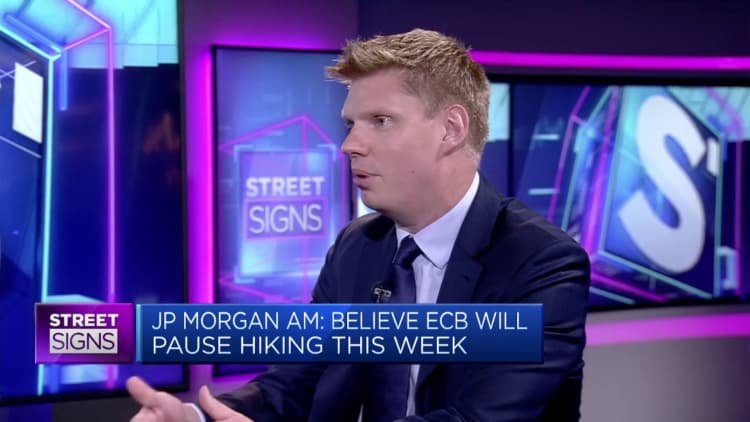
Notably, while the ECB holds steady, financial markets have already reacted through their own mechanisms. A recent sell-off in the bond market has pushed yields higher. For instance, the yield on Germany’s 10-year bund, the Eurozone’s benchmark, has risen by about 40 basis points since the conflict began. This self-tightening effect from the market alleviates some of the pressure on the ECB to act immediately.
Daniel Lacalle, chief economist at Tressis Gestión, expressed a similar view, pointing out that short-term supply shocks caused by war cannot be solved with tighter monetary policy. He argues that a rate hike would not only fail to lower prices driven up by the conflict but would also unnecessarily increase financing costs for small and medium-sized enterprises (SMEs) and households, harming the economy.
