Immigration Surge and the Pension System’s Numerical Illusion
In recent years, Spain has witnessed significant demographic shifts. Since 2018, the country has seen a net increase of over 600,000 immigrants annually. By 2025, the total number of foreign residents has surpassed the 9 million mark, accounting for nearly 20% of the total population. The Spanish government also plans to grant legal status to hundreds of thousands, potentially up to a million, immigrants through a large-scale regularization policy. In theory, this influx of working-age population was expected to revitalize the increasingly strained pension system.
Stagnant Key Ratio: Weak Growth in Contributors
However, the data reveals a more complex picture. The core indicator of the pension system’s health—the ratio of Social Security contributors to pensioners—has not improved as expected. In 2007, before the financial crisis, this ratio peaked at 2.47, meaning nearly 2.5 active workers supported one retiree. By 2025, despite population growth, the ratio hovers around 2.13, still significantly below pre-crisis levels. This indicates that the increase in the number of workers has not translated into a proportional increase in effective social security contributors.
Unbalanced Job Structure: Low-Quality Employment Drags Down the Social Security System
The crux of the problem lies in the quality, not the quantity, of employment. Analysis indicates that a large portion of the new workforce, particularly immigrants, is concentrated in low-wage, low-productivity, or precarious employment sectors. These jobs often fail to provide stable and sufficient Social Security contributions, thus making a limited contribution to the pension fund. This structural imbalance in the labor market means that while the number of ‘people with jobs’ has increased, the growth in ‘high-quality employment’—the kind that provides solid support for the pension system—has lagged, undermining the positive impact of the immigration wave.
The Dual Pressure of an Aging Population and Fiscal Spending
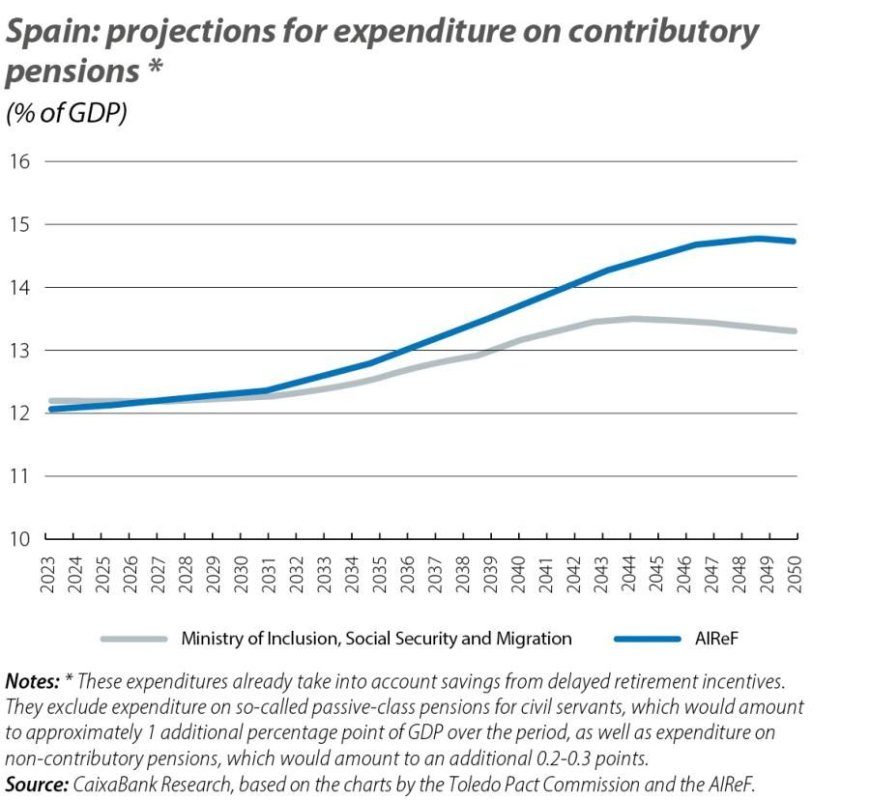
Meanwhile, Spain faces the severe challenge of an accelerating aging population. The large ‘baby boomer’ generation is progressively reaching retirement age, causing a continuous rise in the number of pensioners. On the other hand, Spain’s pension expenditure as a percentage of its Gross Domestic Product (GDP) already exceeds the European average, placing immense long-term pressure on public finances. This situation, where the ‘numerator’ (pensioners) is growing while the ‘denominator’ (effective contributors) struggles to keep up, creates an intractable structural conflict, pushing Spain’s pension system quietly towards a ‘silent crisis’.
