EU Sets Clear Timeline, Spain Follows Suit
To achieve the ambitious goal of climate neutrality by 2050, the European Union has officially adopted the new Energy Performance of Buildings Directive (EPBD), setting a mandatory timeline for the energy transition in the residential sector for member states. The core of this directive is the gradual phase-out of heating and cooling systems that rely on fossil fuels.
Under this directive, Spain and other EU member states must adhere to two key deadlines:
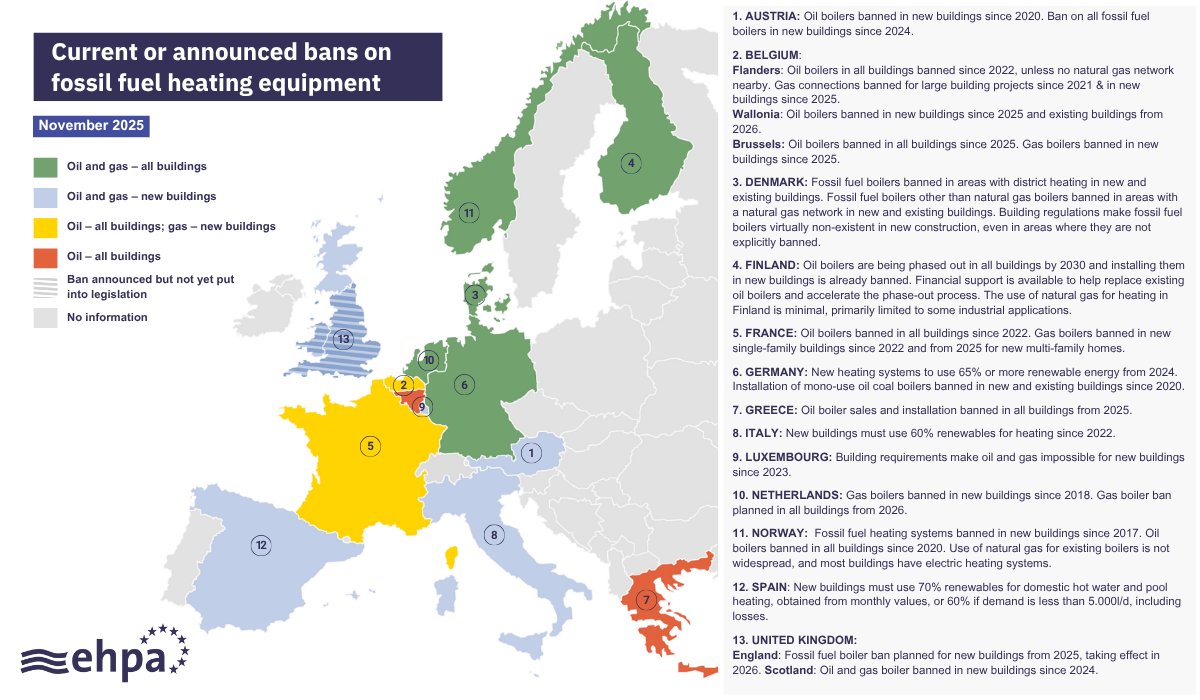
- 2030: All new buildings must be “zero-emission,” meaning conventional natural gas boiler systems can no longer be installed.
- 2040: The ban will extend to all existing buildings. By this date, all “polluting boilers” using fossil fuels across the EU must be phased out or replaced.
This policy means that for the millions of Spanish households still using gas boilers, the next decade is a critical period for upgrading their heating systems. Continuing to invest in traditional gas equipment will face significant policy risks and pressure from asset depreciation.
Green Alternatives: Aerothermal Energy and Biomass
In response to the upcoming changes, mature alternative solutions have already emerged in the market, primarily centered on two technological paths:
Air Source Heat Pumps (Aerotermia): This technology has become the mainstream choice for upgrading urban residences. It provides heating and hot water by extracting thermal energy from the outdoor air, making it highly energy-efficient. When combined with a rooftop photovoltaic system, it can significantly reduce household electricity bills, achieving near-zero-cost energy self-sufficiency.
Biomass Boilers (Calderas de Biomasa): In rural areas and detached houses with more space, biomass boilers offer unique advantages. They use renewable biofuels like wood pellets, are considered a carbon-neutral technology, and have relatively low fuel costs. However, this option requires extra space for fuel storage and involves more frequent maintenance.
Government Incentives: Dual Benefits of Subsidies and Tax Breaks
To ease the financial burden on households during the transition and accelerate policy implementation, the Spanish government, backed by the EU’s “Next Generation EU” recovery fund, has launched a series of financial incentive programs.
Direct Installation Subsidies: Households switching to high-efficiency renewable energy systems, such as air source heat pumps, can apply for direct grants covering 40% to 60% of the total installation cost.
Personal Income Tax Deductions: In addition to direct subsidies, households undertaking energy efficiency improvements can also benefit from tax incentives. As long as the renovation project can demonstrate a reduction of at least 30% in non-renewable primary energy consumption, homeowners can deduct up to 60% of the investment from their Personal Income Tax (IRPF) declaration.
These incentives provide significant financial support for residents, but the window of opportunity is not endless. As the phase-out deadline approaches, subsidy policies may become stricter. Planning the transition early will help lock in current benefits and avoid higher retrofitting costs due to future mandatory enforcement.
