Negotiations Fail, Strike Looms
The atmosphere in Valencia’s education sector is tense as negotiations between teacher unions and the Department of Education over working conditions and educational quality have stalled. Major unions, including STEPV, UGT, CCOO, and CSIF, are planning to call an indefinite strike to pressure the authorities.
Currently, the exact format of the strike has not been decided, with unions still debating whether to implement rotating strikes across the region or stagger them by educational level. The tentative start dates are May 11 or May 25. If the strike begins on May 11, it would deal a devastating blow to this semester’s academic schedule, severely disrupting students’ normal progress.
Parents’ Association Offers “Conditional Support”
Facing the imminent strike, the new president of the Valencian Federation of Parents’ Associations (FAMPA València), Elisabet García, has expressed a cautious stance. She stated that the parent community understands and supports the teachers’ demands for better working conditions and improved public education, as this ultimately benefits the students.
However, the parents’ association emphasizes that any strike action must “respect students’ rights” and should not come at the expense of their academic futures. Therefore, they favor options with less impact on students, such as strikes staggered by educational level or time. At the same time, parents are urgently calling for schools to complete final assessments and grading before the strike begins, if it is unavoidable, to ensure students’ academic achievements are fairly recorded.
University-Bound Students Could Be the Biggest Victims
The group most severely impacted by this potential strike is undoubtedly the second-year Bachillerato students preparing for the Spanish university entrance exams (PAU). Data provided by Valencia’s Minister of Education, Mari Carmen Ortí, reveals the gravity of the situation:
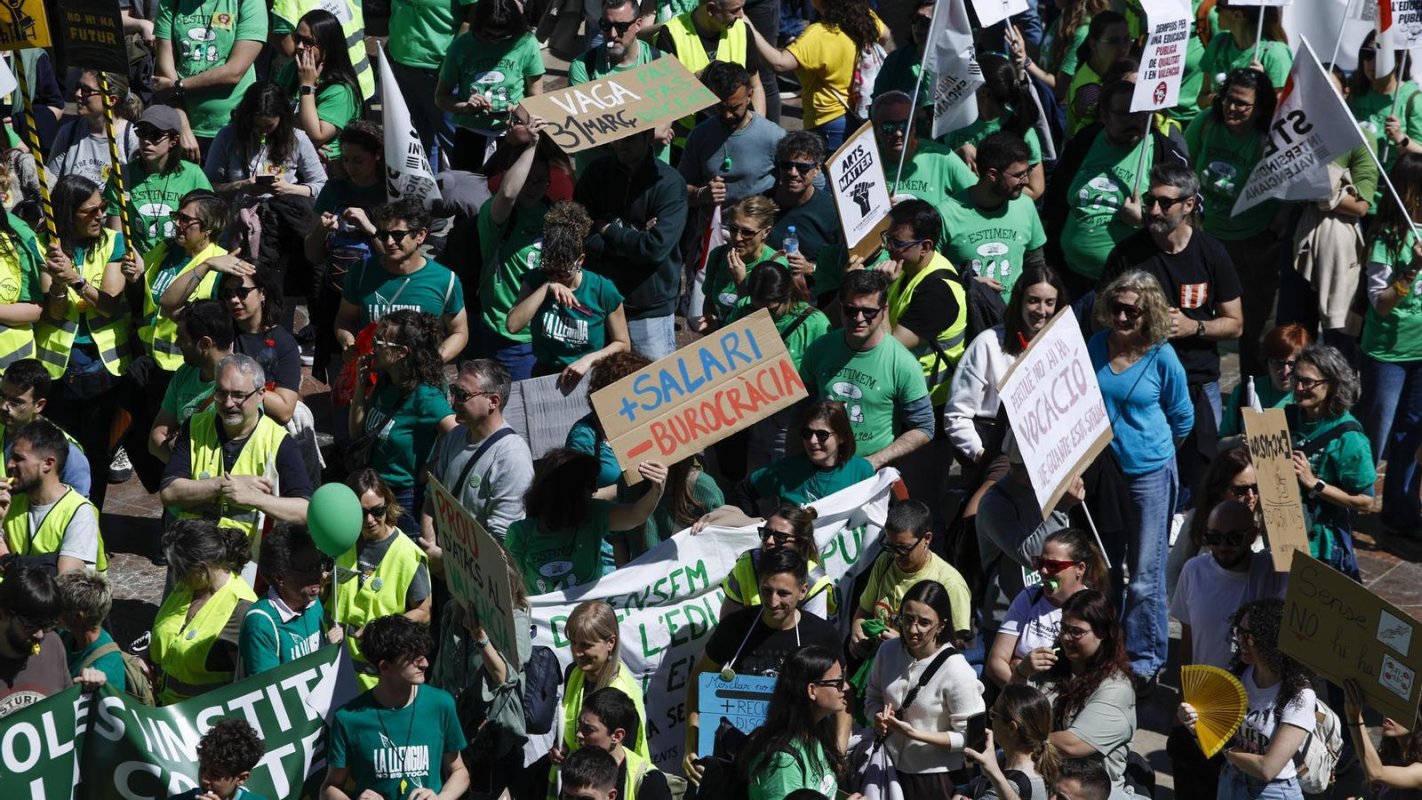
- Second-year Bachillerato (2º de Bachillerato) students: Approximately 24,000 students in public schools across the region are in their final push before the exams.
- Disadvantage in Entrance Exams: If the strike starts in mid-May, these public school students may not be able to complete the review of the entire syllabus, putting them at a significant disadvantage in the university entrance exams compared to their peers in private and semi-private (Concertada) schools.
Local University Spots Face Competition from Other Regions
The strike’s knock-on effects could also extend to university admissions. Minister Ortí pointed out that nearly one-third of students in Valencia’s public universities currently come from other autonomous communities in Spain. If local public school students’ exam scores drop across the board due to the strike, university admission slots that would have gone to Valencian students could be taken by a large number of applicants from outside the region who were unaffected by the strike. This would have long-term negative consequences for local families.
