Debt Reaches New High, but GDP Ratio Eases Slightly
According to the latest official data, Spain’s public finances are facing a severe test. As of February 2026, the general government debt has climbed to €1.723 trillion, representing a 4.7% increase year-on-year and surpassing the previous record of €1.709 trillion set in September.
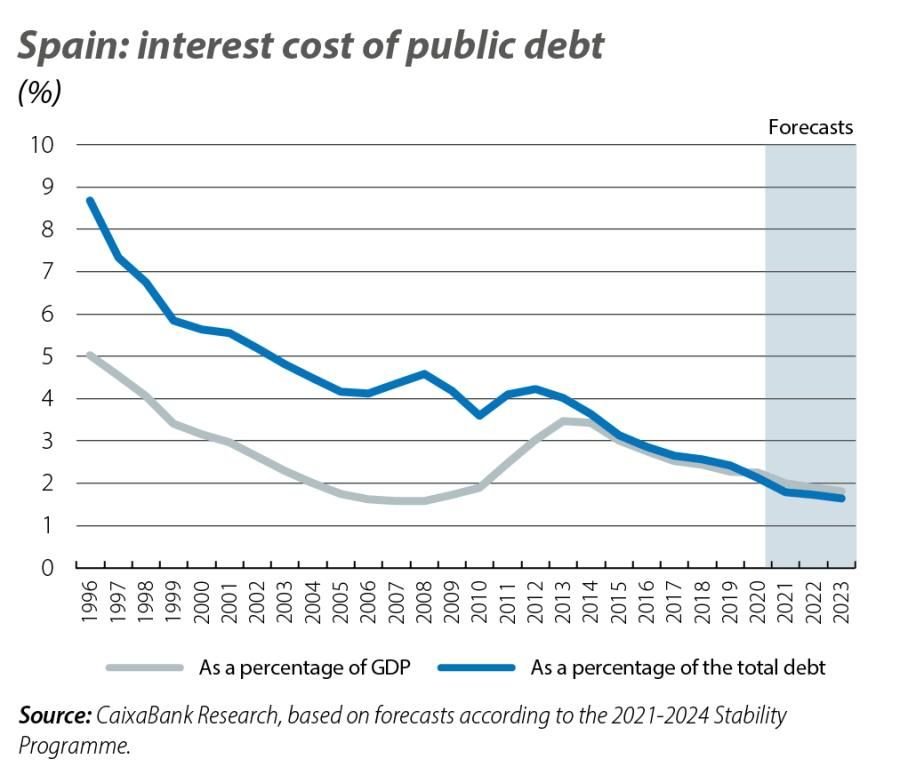
Although the absolute debt figure continues to grow, its ratio to the Gross Domestic Product (GDP) has seen a slight decrease to 101.2%. This indicates that Spain’s economic growth is helping to dilute the debt burden to some extent, but the overall scale of debt is still on an upward trajectory.
Structural Pressure: Social Security Deficit Drives Up Central Government Debt
Analyzing the debt structure reveals that the pressure is primarily concentrated at the central government level. The debt balance directly attributable to the central administration has reached a staggering €1.573 trillion, equivalent to 92.4% of GDP and marking a 5.1% increase year-on-year.
Notably, the financial gap in the Social Security system is particularly striking. The system’s debt has soared to €136.181 billion, a sharp 7.9% increase from the previous year. This is mainly due to continuous government fiscal transfers to ensure the sustainability of the pension system, highlighting the long-term pressure of an aging population on public finances.
Divergent Regional Finances, Long-Term Debt Remains Dominant
At the regional level, fiscal performance varies. The debt of the Autonomous Communities has risen to €345.706 billion, equivalent to 20.3% of GDP. Meanwhile, local governments (municipalities and towns) have achieved a significant 9.3% reduction in their debt, indicating that some local administrations have seen success in their fiscal consolidation efforts.
An analysis of the debt maturity structure shows that Spain’s public debt is predominantly long-term, amounting to approximately €1.46 trillion, which underscores the long-term nature of the debt problem. Simultaneously, short-term financing instruments and credit lines are also increasing, indicating that the overall debt system continues to expand.
The EU Perspective: Deficit Improves, but High Debt Persists
According to assessments by Eurostat, the European Union’s statistical office, Spain has made some progress in controlling its fiscal deficit. Data shows that Spain’s fiscal deficit for 2025 fell to 2.4% of GDP, with a debt ratio of approximately 100.7%.
However, this level remains well above the 60% debt-to-GDP ratio threshold set by the EU’s Stability and Growth Pact. Within the EU, Spain belongs to the ‘high-debt club’ alongside countries like France, Italy, and Belgium. While its situation is slightly better than that of Greece (146.1%) and Italy (137.1%), Spain’s fiscal space is significantly more constrained compared to low-debt countries such as Germany and those in the Nordic and Baltic regions. Overall, despite some control over the deficit, the massive existing debt stock means that Spain’s fiscal risks are far from resolved.
