Global Water Risk Landscape and Spain’s Position
The World Resources Institute (WRI), a research organization that monitors global water conditions, has assessed the water resource situations of 164 countries through its Aqueduct Water Risk Atlas. The findings show that Spain ranks 29th globally for water stress, positioned between Eritrea and Algeria.
This global ranking categorizes Spain as a country with ‘high water risk.’ For reference, the country currently facing the greatest water stress is Kuwait, while those with the least stress are Iceland and Papua New Guinea, ranking 163rd and 164th, respectively.
Defining ‘High’ and ‘Extremely High’ Risk
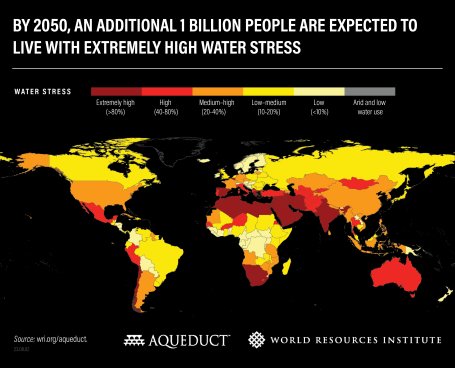
The WRI’s assessment system provides clear quantitative definitions for water risk. A country or region is classified as ‘high water risk’ when it uses 40% of its available water supply. Spain is currently at this level.
The ‘extremely high water risk’ category is even more severe, defined as using at least 80% of the available water supply. Although Spain as a whole has not yet reached this level, some regions are already facing more severe challenges.
Regional Disparities and Local Challenges
Water stress is not evenly distributed within Spain. The report notes that certain areas are already experiencing pressure close to ‘extremely high water risk.’ For example, the coastal strip extending from Murcia shows a stark contrast between its water consumption and available reserves, foreshadowing the potential future situation for the entire country.
Outlook for 2030: Impending ‘Extremely High’ Risk
The WRI’s predictive models indicate that Spain’s water crisis will intensify in the coming years. By 2030, Spain is projected to rise to 22nd place among the countries with the most severe water issues globally. At that point, Spain will be officially classified in the ‘extremely high water risk’ category, the most critical level, meaning the nation’s overall water consumption will meet or exceed 80% of its available supply, leading to a critical situation.
