Gibraltar Strait Tunnel: A Century-Old Dream Connecting Europe and Africa Takes a Crucial Step Forward
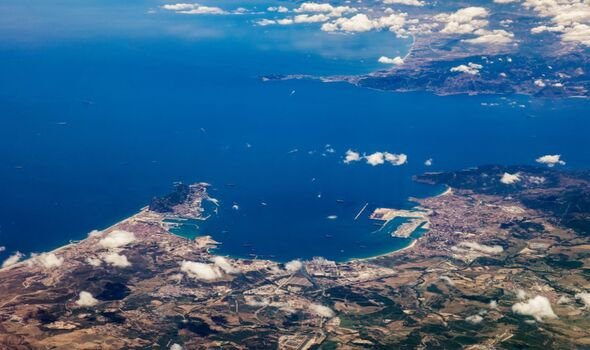
The Strait of Gibraltar, separating Spain and Morocco, is only 14 kilometers wide at its narrowest point, yet it forms a formidable natural barrier between Europe and Africa. A grand project conceived nearly half a century ago to overcome this barrier—the Gibraltar Strait Tunnel—is now transforming from a distant dream into a tangible project with a clear timeline.
Historic Breakthrough: Technical Hurdles Overcome
The project has been long-envisioned. As early as 1981, Spain established the state-owned ‘Spanish Company for Fixed Communication across the Strait of Gibraltar’ (SECEGSA) to specifically study and advance the project, a task that has continued for over four decades. However, the project remained in the planning stages for a long time.
2026 has become a pivotal turning point for the project. Commissioned by SECEGSA, German tunnel boring machine manufacturer Herrenknecht, after months of evaluation, officially confirmed that constructing the tunnel with existing engineering technology is feasible. This conclusion has cleared the project’s biggest technical obstacle.
To support this progress, the Spanish government approved an additional €1.73 million for the project in March 2026 to deepen technical studies. Meanwhile, the Spanish National Research Council (CSIC) has been tasked with completing a comprehensive undersea geological survey within the first half of 2026, including high-resolution bathymetric mapping, sub-bottom profiling, and rock sampling.
Grand Design: Tunnel Specifications and Route Planning
According to the latest design proposal, this undersea tunnel will be a world-class engineering feat. Its main parameters are as follows:
- Total Length: 65 km, with approximately 40 km running underground within Spain.
- Maximum Depth: The tunnel will descend to a depth of 475 meters below sea level.
- Structure: It will consist of two independent single-track railway tubes and a central service and safety gallery, ensuring safe and efficient operation.
- Route: The northern portal will be located near Punta Paloma in the province of Cádiz, Spain, with the terminal near Vejer de la Frontera. The southern end will connect to Tangier, Morocco.
- Transit Time: Once completed, the rail journey across the strait is expected to take only about 30 minutes, dramatically transforming the transportation landscape between the two continents.
Major Challenges: Seismic Risk and Massive Investment
Despite its technical feasibility, the project faces two major obstacles. The first is the complex geological environment. The Strait of Gibraltar is located at the junction of the Eurasian and African tectonic plates, a seismically active area near the epicenter of the historic 1755 Lisbon earthquake. The tunnel must have extremely high seismic resistance to ensure safe operation for decades to come.
The second is the astronomical construction cost. According to the latest estimates, the construction cost for Spain’s side alone is as high as €8.5 billion. Although this figure is lower than the earlier projection of €15 billion, it remains a colossal sum. The Spanish government is actively seeking solutions, hoping to include part of the funding in the EU’s ‘Next Generation’ recovery fund program.
Future Outlook: A Long but Clear Timeline
The project’s advancement has a preliminary schedule. If the initial geological survey work proceeds smoothly, bidding for the exploratory gallery to first probe the geology could start as early as 2027. The construction of this exploratory gallery alone is expected to take 6 to 9 years.
This means that full-scale construction of the main tunnels for passenger and freight transport will begin after that. Considering all factors, it is widely predicted that this ‘tunnel of the century’ connecting Europe and Africa may not officially open for operation until between 2035 and 2040. Although the wait is still long, after 45 years of extensive planning, the tunnel is now closer to reality than ever before.
