A Structural Shift from a Nation of Homeowners to a Rental Society
A joint report by the Spanish Ministry of Social Rights and Consumer Affairs and the Institute of Philosophy of the Spanish National Research Council (CSIC) reveals that Spain is undergoing a profound structural change in its housing sector. Over the 14 years from 2008 to 2022, the proportion of home-owning households in this traditionally high-ownership country has significantly dropped from 79% to 63.9%.
Correspondingly, the rental market has expanded. The percentage of renting households rose significantly from 11.9% to 19.2%. Simultaneously, the proportion of households acting as landlords nearly tripled, growing from 3.4% to 9.8%, reflecting that more families are treating property as an investment asset rather than just a place to live.
The Stark Divide: Non-Homeowners vs. Multi-Property Owners
The report’s core data reveals a growing polarization in Spanish society regarding housing. The most striking figure is the 63% surge in the number of households with no property ownership between 2008 and 2022.
Meanwhile, the scales of wealth have tipped dramatically to the other side. The number of households owning two or more properties increased by 54%, while those owning only their primary residence decreased by 22%. This contrast clearly illustrates the shrinking housing assets of the middle class and the expansion of the multi-property owner group.
Intensifying Concentration of Property Ownership
The concentration of wealth is particularly evident in the real estate market. The report notes that the proportion of owners with two or more properties has risen from 46.1% in 2008 to 51.7% in 2022, making them the majority among property owners for the first time.
This concentration trend becomes even more pronounced among those holding larger numbers of properties:
- Large-scale landlords (owning over 10 properties): The total number of properties they hold has quadrupled, growing from 138,000 to 626,000.
- Mid-to-large-scale landlords (owning 6 to 10 properties): This group saw a 51.6% increase in their numbers, with the total properties they own growing from approximately 827,000 to over 2.3 million.
- Other multi-property owners also saw significant growth: those owning three properties increased by 22.5%, four by 32.2%, and five by 43.1%.
Market Deepens Inequality Instead of Improving Housing Access
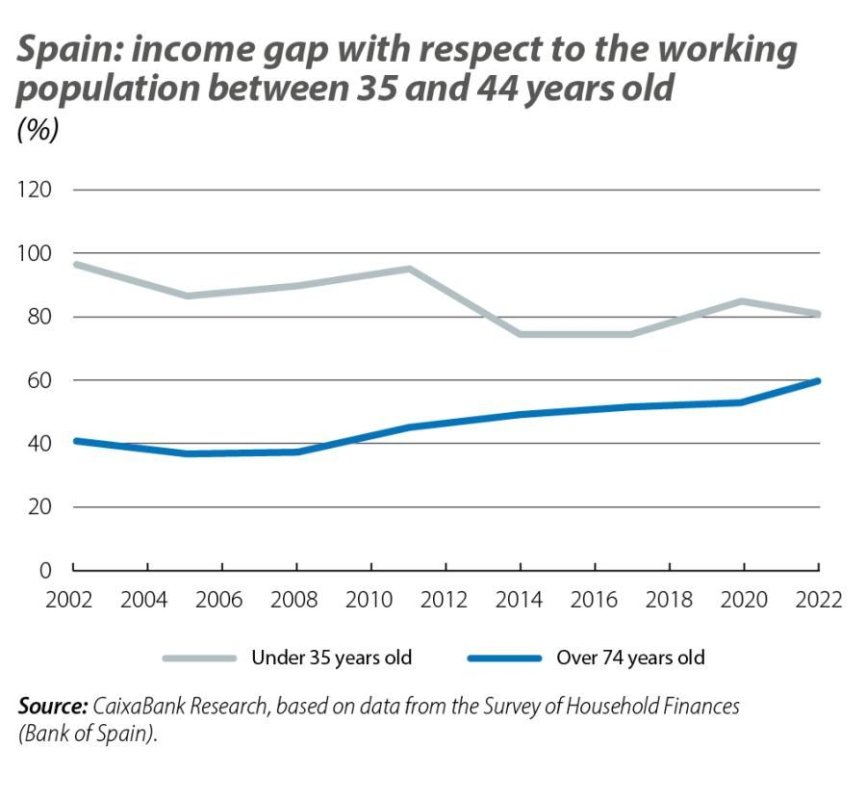
The study ultimately emphasizes that Spain’s real estate market mechanism, rather than improving housing accessibility for the general public, has reinforced existing wealth inequalities. The growth in housing stock has primarily benefited those who already own assets, exacerbating the Matthew effect in the housing sector, where ‘the rich get richer and the poor get poorer’.
Currently, 61% of rental housing in Spain is controlled by multi-property landlords (including individuals, corporations, investment funds, and public institutions owning two or more properties). The report concludes that property ownership is becoming increasingly concentrated, and this trend intensifies as the number of properties held by individuals grows, posing a serious challenge to social equity.
