Spain’s Defense Spending Surges Significantly
According to the annual armament report released by the Stockholm International Peace Research Institute (SIPRI), Spain is experiencing rapid growth in its defense spending. The data shows that in 2025, Spain’s total defense expenditure will reach €34.265 billion, a staggering 50% increase over the past year. This marks the first time in two decades that the country’s military spending has surpassed the 2% of Gross Domestic Product (GDP) threshold. Over a longer period, Spain’s defense spending has cumulatively grown by 122% in the last decade. The report notes that this increase is among the highest in Europe, second only to Belgium (a 59% increase).
Global Military Expenditure Rises for 11th Consecutive Year
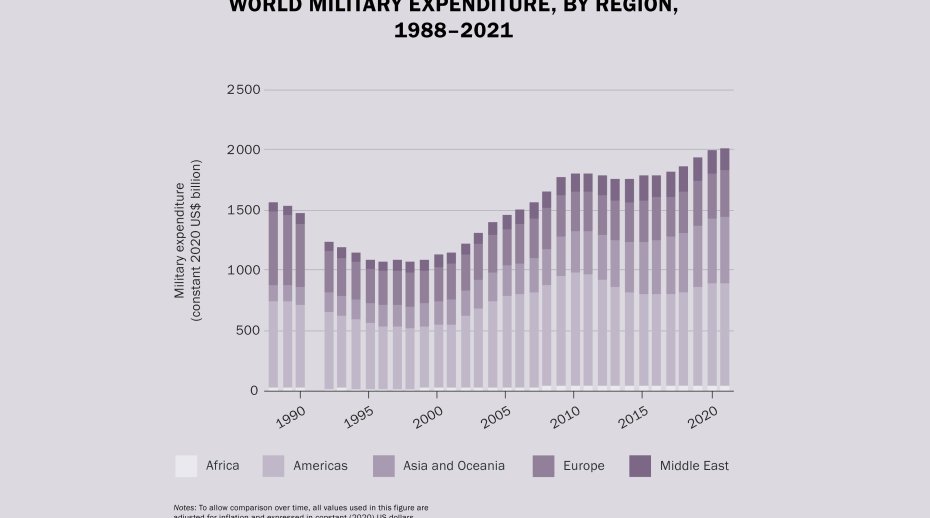
Spain’s military growth is part of a global ‘remilitarization’ trend. The report analyzes that the Russia-Ukraine conflict, the war in Gaza, and tensions in the Middle East and Sudan are the primary drivers behind the rise in global military spending. In 2025, total global military expenditure reached €2.49 trillion, a 2.9% year-on-year increase, marking the 11th straight year of growth. The combined expenditure of the United States, China, and Russia amounted to €1.26 trillion, accounting for 51% of the global total.
Europe’s Remilitarization Trend is Prominent
Europe has become one of the main drivers of the global surge in military spending, with its expenditure level reaching the highest point since the Cold War. In 2025, European military spending totaled €804 billion, a 14% year-on-year increase. Among the 29 European member states of NATO, total spending reached €520 billion, with 22 countries now meeting or exceeding the 2% of GDP target. Specifically, Germany’s military spending grew by 24%, with plans to build ‘the strongest army in Europe’; Russia’s military spending increased by 5.9%, accounting for 7.5% of its GDP; while Ukraine’s military expenditure surged by 20%, representing 40% of its GDP, reflecting profound changes in the regional security environment.
Analysis of Dynamics in Major Regions
Despite the upward global trend, performance varies by region. The United States saw its military spending in 2025 decrease by 7.5% year-on-year to €887 billion, primarily due to the non-approval of new military aid to Ukraine. However, experts believe this is a short-term phenomenon, as the U.S. continues to increase investments in both nuclear and conventional forces. Its 2026 budget already exceeds €930 billion, and it is projected to potentially reach €1.4 trillion in 2027. The Asia and Oceania region recorded its fastest growth since 2009, with total military expenditure reaching €633 billion, an 8.1% year-on-year increase. Within this, China continued its growth trend of over thirty years with a 7.4% increase, while Japan’s spending grew by 9.7%. In contrast, the Middle East remained relatively stable with only a 0.1% increase. Israel’s military spending decreased by 4.9% following an early 2025 ceasefire agreement but remained 97% higher than in 2022.
