In recent years, Spain’s economy has become one of the few major economies in the Eurozone maintaining high growth, with a consistently booming job market. However, behind these impressive macroeconomic figures lies a widespread public anxiety over the rising cost of living, creating a paradoxical situation where ‘the country gets richer, but individuals feel poorer’.
Strong Macroeconomic Performance
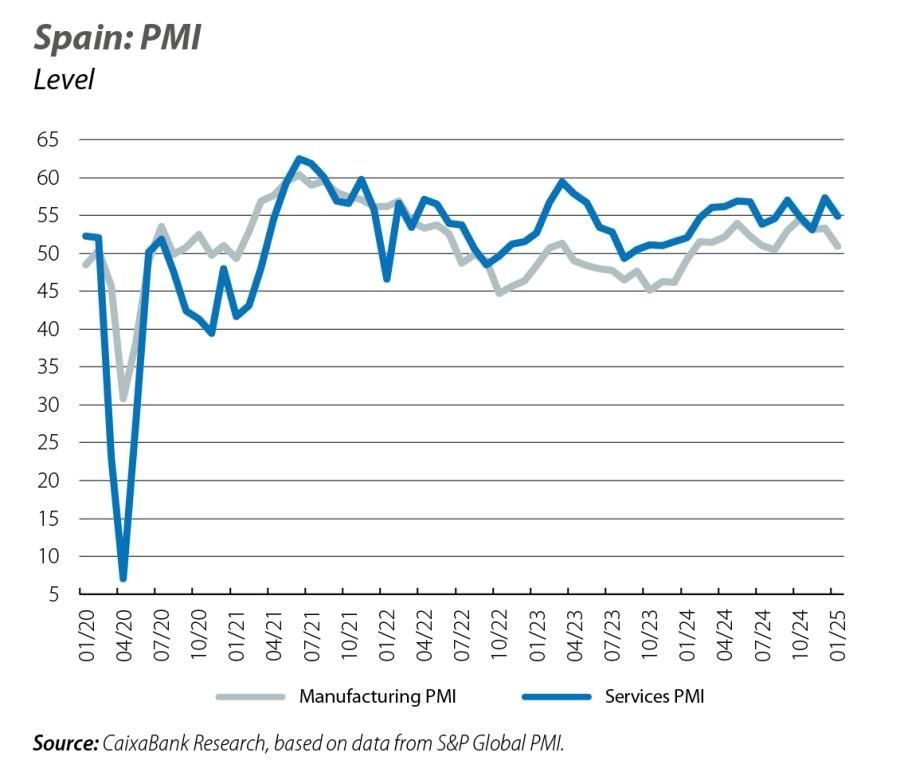
Multiple core indicators show that the Spanish economy is in a strong expansion cycle. As one of the major economies in the Eurozone, its growth rate continues to outpace its peers. The job market’s performance is particularly outstanding: total employment has not only set a new historical record, but the unemployment rate has also dropped to its lowest level in years. Since the pandemic, the nation’s workforce has grown by over 2.4 million people, and the number of unemployed has decreased by about 640,000 compared to 2019, demonstrating the economy’s powerful resilience and dynamism.
Individual Wages: Nominal Gains, Real Losses
Contrasting with the optimistic macroeconomic picture is the financial sentiment of the average salaried worker. Data indicates that the average net annual salary in Spain is projected to be €24,985 in 2025. However, when accounting for cumulative inflation since 2019, the real purchasing power of this salary has actually decreased by approximately 4.3%. This means that even though the numbers on their paychecks are rising, the goods and services people can afford have diminished. The continuous climb in basic living costs—such as food, housing, and energy—has left many feeling that ’money isn’t worth what it used to be,' with financial pressure increasing rather than easing.
The Household Income Enigma: Buoyed by Employment and Pensions
An interesting contrast is that while individual purchasing power is falling, the overall financial situation of Spanish households is improving. According to data from the Spanish National Statistics Institute, the average net household income reached €38,994 in 2024, which, after adjusting for inflation, is still 7% higher than in 2019. This growth is primarily attributed to two factors: first, the significant expansion of the job market, which has transitioned more households from single-income to dual-income, thereby boosting total family earnings. Second, the government has consistently raised pensions in line with inflation in recent years, effectively safeguarding the income and purchasing power of retirees. This, in turn, has indirectly pushed up the average household income level, which includes these pension payments.
Unequal Distribution: Who is Missing Out on the Growth Dividend?
This paradox of ‘devalued wages, increased household income’ reveals a profound structural problem within Spain’s current economic growth: the unequal distribution of its dividends. For the large number of middle-class and young workers who rely on fixed salaries, the sense of personal gain is generally weak. Faced with the mounting pressure of rising rents, mortgages, and daily expenses, their limited wage increases make it difficult to truly share in the fruits of macroeconomic prosperity. Therefore, the core challenge facing Spanish society today is not whether the economy is growing, but how to ensure its benefits are distributed more equitably among all members of society.
